Working hours: Mon - Fri | 08:00 - 17:00HOTLINE: 0867 95 7568
Technical Article

MELAMINE TOXICITY AND BIG HEAD SYNDROME IN SHRIMP

Water Sac Syndrome, or Big Head Syndrome in shrimp, in some cases, causes the size of the shrimp's head to almost double. This phenomenon of deformed shrimp heads has been observed in shrimp during the second month of the culture cycle and just before harvest.

ProtocolShrimpNovember 21, 2018👁 348 views
Click to listen to an AI-narrated summary
AI Summary

Generate an English summary for MELAMINE TOXICITY AND BIG HEAD SYNDROME IN SHRIMP

AI-generated summary based on the full article content below.

Editorial Framing

Why this article matters

    Full Article
    MELAMINE TOXICITY AND BIG HEAD SYNDROME IN SHRIMP

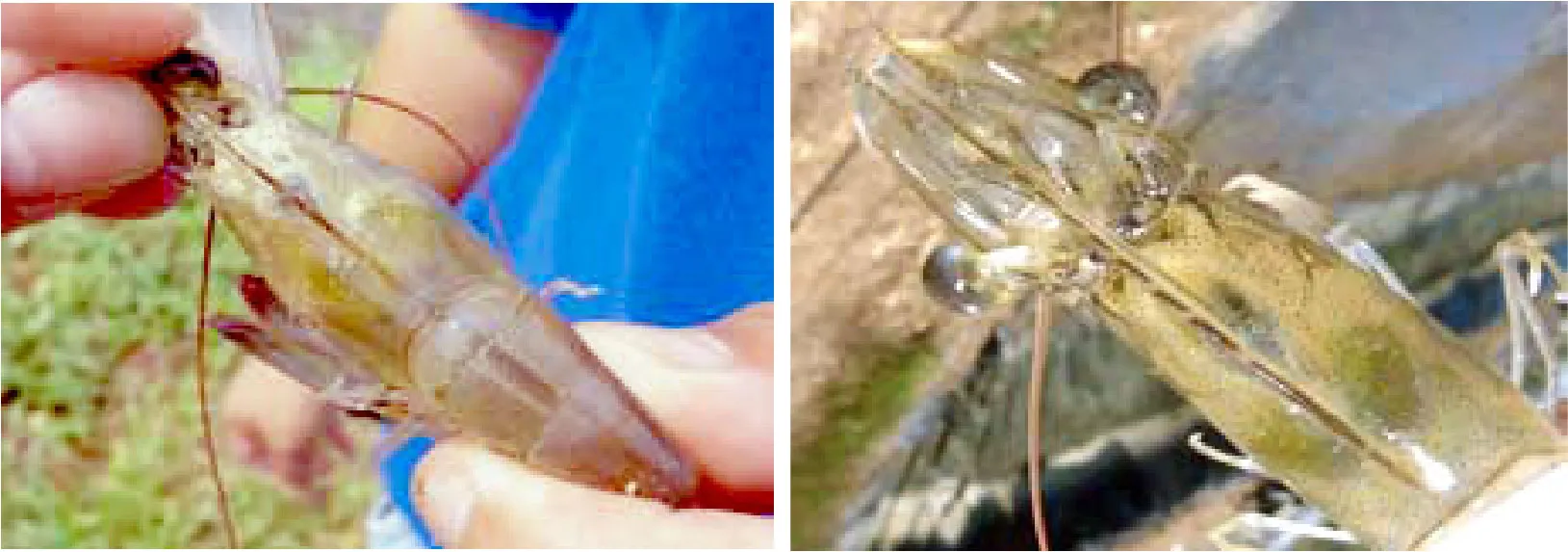
    Water Sac Syndrome or Big Head Syndrome in shrimp, in some cases, causes the shrimp's head size to nearly double. This deformed head phenomenon has been observed in shrimp during the second month of culture and just before harvest. The growth process is completely altered. Some shrimp develop normally with a “water sac” on their head, while others stop growing and die. The most probable cause of this syndrome is chronic toxicity from Melamine – a substance banned in shrimp feed. Melamine is added to feed to increase its protein content. Histopathological changes in Pacific whiteleg shrimp (Litopenaeus vannamei) were tested by inducing infection with Melamine along with Acid cyanuric in pelleted feed.

    This study aimed to determine the effects of Melamine and Acid cyanuric on the clinical signs and histopathological changes in Litopenaeus vannamei shrimp. 60 whiteleg shrimp weighing 2 g were fed 4 times/day with pelleted feed containing 100-120 mg Melamine and 80-100 mg Acid cyanuric/kg feed and cultured in seawater at 25 ppt salinity for 70 days. Water temperature was maintained stably at 28 ± 1°C. Some shrimp showed signs of hepatopancreatic disease after 30 days and became clearly visible by day 70. Some shrimp developed a medium to large “water sac” on their head, some had white spots or patches on the hepatopancreas. The white spots indicated the presence of crystalline precipitates when observed under a light microscope.
    Big_head_1

    Histopathological changes were observed in both groups of shrimp with swollen cephalothorax and white spots. Irregularly shaped crystals were retained in the antennal glands, and diffuse necrotic cells associated with crystals were found in the coelomosac complex. Spheroids formed from the lymphoid organ were also found, as well as crystalline precipitates in the hepatopancreas and hematopoietic tissue. These results indicate that shrimp feed containing Melamine and Acid cyanuric can produce insoluble crystals in the antennal glands, obstructing and weakening the excretory system, leading to the swollen cephalothorax phenomenon (Big Head Syndrome in shrimp).

    Source: Aquaculture times

    Translated by: Trần Thị Thúy Quyên



    Quick Q&A

    Frequently asked questions on this topic

    What does "MELAMINE TOXICITY AND BIG HEAD SYNDROME IN SHRIMP" cover?

    Water Sac Syndrome, or Big Head Syndrome in shrimp, in some cases, causes the size of the shrimp's head to almost double. This phenomenon of deformed shrimp heads has been observed in shrimp during the second month of the culture cycle and just before harvest.

    Which species does this article apply to?

    Shrimp — Hepatopancreas, Stress, Water & Environment

    Related Products

    Products linked to this topic

    Product reference for PRO GUT
    shrimpThần Vương Blue

    PRO GUT

    Premium digestive probiotics specifically for shrimp farming in lined ponds

    Product reference for MAX 4000
    tom / ca / ocThần Vương Blue

    MAX 4000

    Probiotic for treating toxic gases NH3, H2S, NO2

    Product reference for LALSEA BIOREM
    allNguyên liệu

    LALSEA BIOREM

    Ammonia removal, biological organic treatment, effective at high salinity

    Product reference for HERB GUARD
    shrimpThần Vương Blue

    HERB GUARD

    Enhance liver function, improve color of hepatopancreas

    More Reading

    Related technical articles

    VAI TRÒ CỦA BỔ SUNG NƯỚC ĐIỆN GIẢI CHO TÔM
    Protocol•Shrimp•November 22, 2018

    THE ROLE OF ELECTROLYTE SUPPLEMENTATION FOR SHRIMP

    A recent report published in the journal Aquaculture International has provided further insight into the role of electrolyte supplem[...]

    Toàn cảnh thị trường tôm thế giới 2025 — Dữ liệu từ Shrimp Insights (Tháng 2/2026)
    Technical article•Shrimp•April 9, 2026

    Global Shrimp Market 2025 Overview — Shrimp Insights Bulletin February 2026

    Full-year 2025 global shrimp trade summary: Ecuador leads exports at 1.39M MT (+15%), EU imports surge 21%, US tariff shifts reshape[...]

    SỰ THAY ĐỔI CỦA HỆ VI SINH ĐƯỜNG RUỘT DO SỰ NÓNG LÊN TOÀN CẦU. ĐIỀU HÒA SỨC KHỎE VẬT CHỦ VÀ TÌNH TRẠNG BỆNH Ở ĐỘNG VẬT BIẾN NHIỆT
    Research Insight•Shrimp•February 28, 2026

    CHANGES IN GUT MICROBIOTA DUE TO GLOBAL WARMING. REGULATING HOST HEALTH AND DISEASE STATUS IN POIKILOTHERMIC ANIMALS

    Global warming alters the gut microbiota of Pacific whiteleg shrimp by restructuring enterotypes, increasing the risk of diseases su[...]

    Ask Than Vuong

    Aquaculture technical assistant

    Hello there 👋

    Describe your pond issue or pick a question below.