In intensive shrimp farming, oxygen consumption is an important indicator that greatly affects the physiological status of farmed shrimp. This is the result of a study to flexibly determine the oxygen consumption rate of shrimp in intensive farming, as well as water quality variables and shrimp growth rate, based on a Dynamic Modeling System.
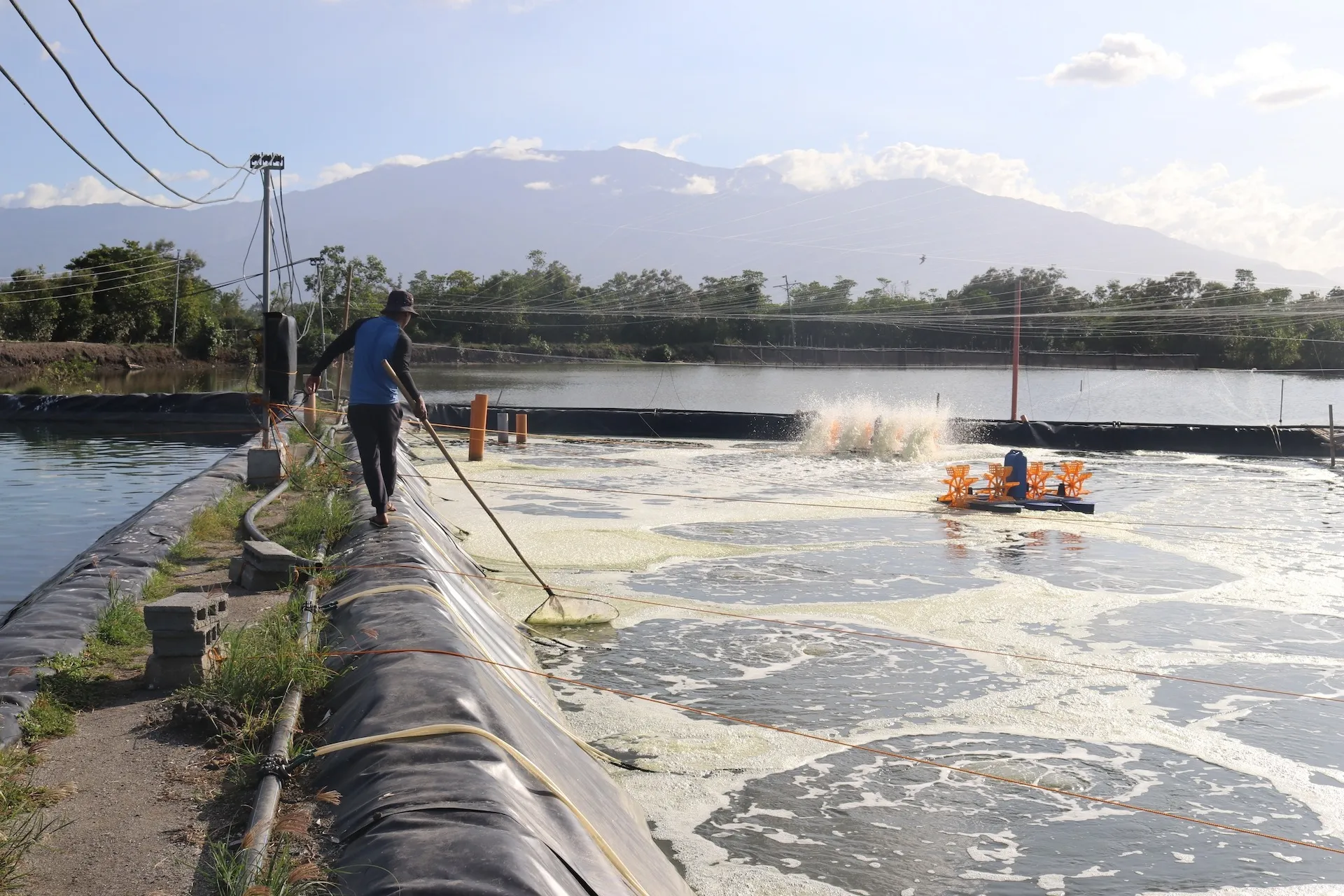
Dissolved oxygen is the most important and variable water quality parameter in aquaculture systems because aerobic organisms in the water require sufficient oxygen for biochemical processes. Dissolved oxygen in intensive farming ponds is primarily affected by pH, temperature, salinity, agitation, and atmospheric pressure. Dynamically, dissolved oxygen concentrations will fluctuate due to biological, physical, and chemical processes.
In intensive farming, shrimp require oxygen for biological energy balance in their metabolic system. The oxygen consumption rate greatly affects the metabolic status of shrimp as they grow and are active. The following results were obtained from a study to measure the oxygen consumption rate of shrimp in intensive farming ponds and its relationship with water quality variables and shrimp growth.
Research Methodology
This study was conducted from April to June 2019, corresponding to the whiteleg shrimp farming period in the intensive aquaculture area of Bayeman – Tongas. Data collection for oxygen consumption, biological growth, and water quality was performed every 10 days from stocking until harvest.
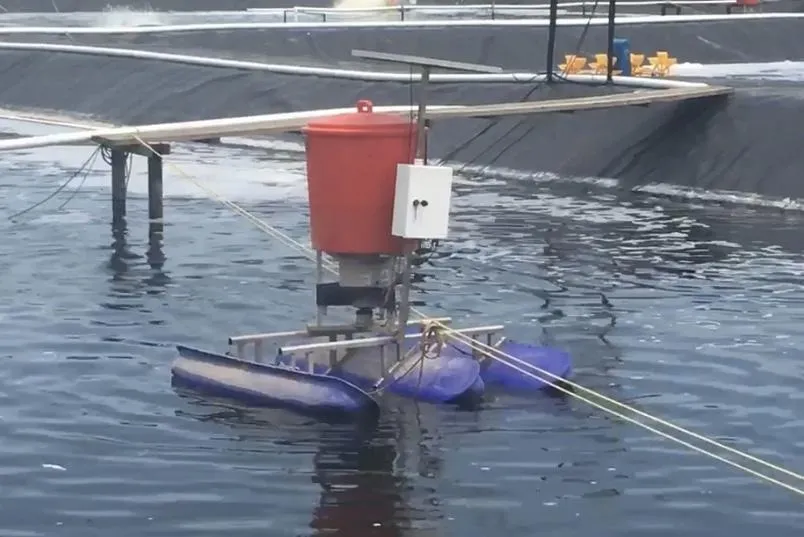
Whiteleg shrimp farming was carried out in two 400 m2 ponds lined with HDPE (high-density polyethylene) plastic, with a stocking density of 112 shrimp/m2 and using a 4 horsepower paddlewheel aerator for each pond. Data on shrimp oxygen consumption rate were collected by random sampling, followed by experiments conducted using 20 L tanks and a DO meter (AZ 8402, China).
From each pond, 4 shrimp were randomly selected. The selected shrimp had intact internal organs, were actively moving, and had healthy guts.
Observations of water quality parameters such as pH, temperature, dissolved oxygen, and salinity were conducted on-site, while observations of phosphate, nitrite, nitrate, total ammonia nitrogen (TAN), and total organic matter (TOM) were measured at the BBPAP Situbondo laboratory every 10 days.
Results and Discussion
The oxygen consumption rate of shrimp during the growth phase tended to decrease with the regression model Y = 9.444 - 0.047x. The highest oxygen consumption rate reached 0.450 mgO2/L and the lowest was 0.002 mgO2/L (Figure 1). This means that the heavier the shrimp, the lower the required oxygen demand.
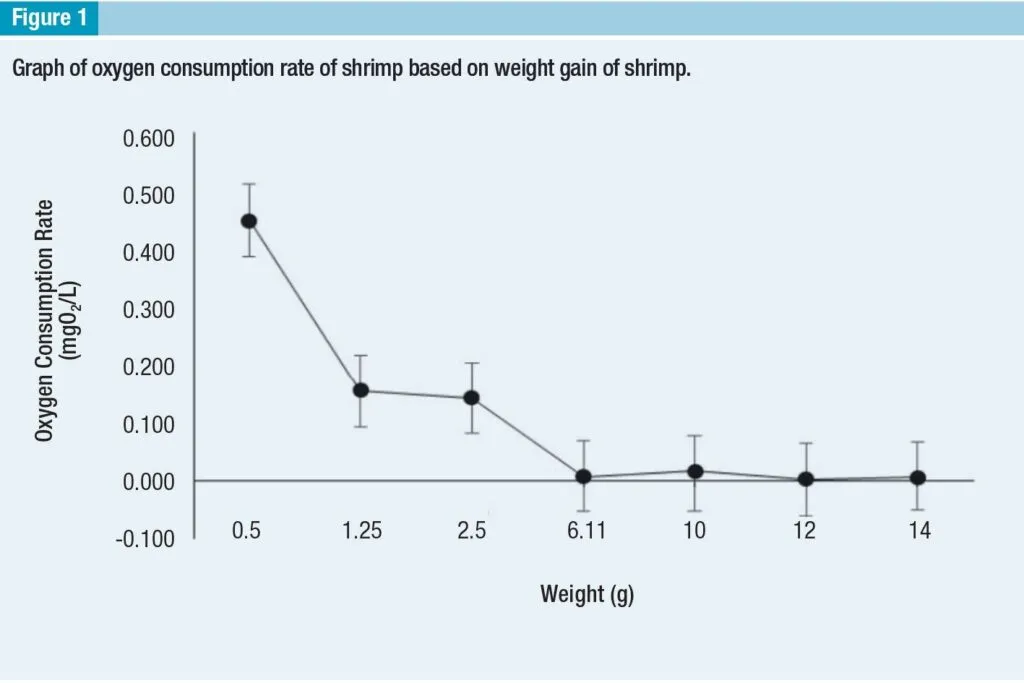
This is because smaller shrimp require higher energy for their metabolic systems. Additionally, shrimp oxygen consumption rate is also affected by environmental conditions such as temperature and salinity (Bett and Vinatea, 2009).
“Results from other studies show that the minimum oxygen consumption rate for shrimp in the juvenile stage is 0.65 mg/L with an average shrimp weight of 4.1g (Vinatea et al., 2009).”
On the graph of shrimp body weight and average daily weight gain (Figure 2), it can be seen that shrimp body weight continued to increase from the initial farming stage until harvest. However, the average daily weight gain of shrimp appeared to decrease around day 50 of farming and then seemed to stagnate.
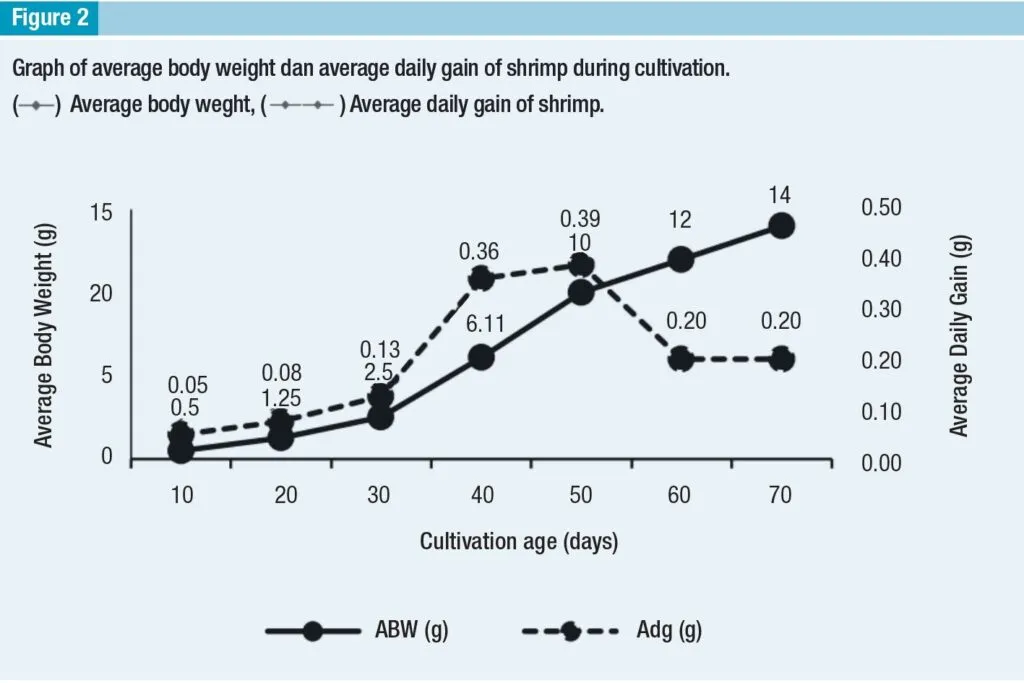
The growth stagnation at 50 days of age is attributed to high shrimp density and biomass in the pond, and low water salinity, which affect biological growth conditions and the balance of the shrimp's osmoregulation system (Bray et al., 1994; Sookying et al., 2011; Chand et al., 2015).
These conditions will also genetically affect the expression level of molt-inhibiting hormone (MIH) at each developmental stage of shrimp (Gao et al., 2016).
Shrimp growth rate is exponential at 30-50 days of age. Knowing this exponential growth phase, it is hoped that certain strategies or manipulations can be implemented to promote shrimp growth during that period. Techniques that can be applied include adjusting feeding habits and supplementing nutrients in the feed (Jayesh et al., 2015).
Based on simulation analysis with the dynamic modeling concept, it was shown that oxygen consumption is linear with the dynamics of average daily gain and inversely proportional to the rate of shrimp biomass increase in the pond (Figure 3).
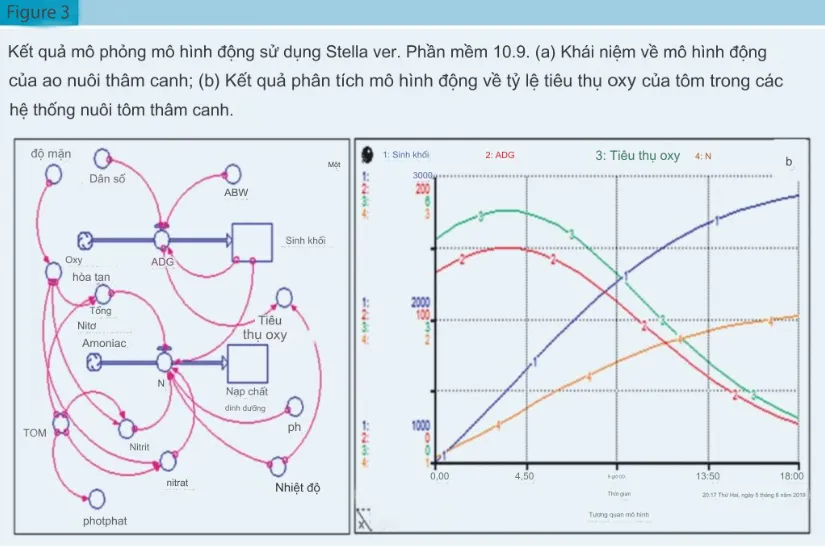
The oxygen consumption rate will fluctuate with the shrimp's growth rate because, during growth, physiologically sufficient oxygen is required for their metabolic activities. The dissolved oxygen level required for the metabolism of adult shrimp at a stable temperature of 28-33°C is 1.49 mg/L (Niu et al., 2003).
The increase in shrimp biomass, described as having a sigmoidal growth curve during the farming period, will impact the increasing accumulation of nutrients.
The increasing accumulation of nutrients will lead to excessive enrichment in the pond water environment (Wu et al., 2014). Water rich in excess nutrients will cause phytoplankton blooms in the pond and disrupt the balance of the aquaculture ecosystem (Muendo et al., 2014). Phytoplankton blooms will also affect the food chain in the pond.
The oxygen consumption rate of shrimp in intensive ponds has a strong relationship with water salinity and total organic matter (TOM). Based on water quality variable data, the oxygen consumption rate has an inverse correlation with salinity and TOM parameters.

Furthermore, it does not correlate with other water quality parameters. The inverse relationship with water salinity indicates that fluctuations in mineral ions in the pond significantly affect the oxygen consumption rate due to shrimp metabolism for osmoregulation (Re and Diaz, 2011).
Increased oxygen consumption rate is a physiological response of shrimp to maintain body homeostasis due to fluctuations in water salinity (Hernandez et al., 2005).
“Meanwhile, the increasing organic matter content due to increased shrimp biomass will affect the increased oxygen demand for organism respiration (Luong et al., 2016; Leduc and Pilditch, 2017).”
Regarding the biological growth variable of shrimp, the oxygen consumption rate has a strong relationship with the average body weight of shrimp but no relationship with the average daily weight gain. This is because throughout their life cycle, the oxygen consumption rate of shrimp at each growth stage or each body weight has different oxygen demand ratios (Budiardi et al., 2005).
Smaller shrimp have a higher oxygen consumption capacity for their metabolic activities (Djawad and Jompa, 2002). Different oxygen consumption rates in the metabolic system at each developmental stage of an organism are also predicted to be a form of physiological and behavioral adaptive response (Kieffer and Wakefield, 2009; Bouyoucos et al., 2018).
Conclusion
Based on the research results, it can be concluded that the flexible fluctuations in oxygen consumption and average daily gain of shrimp in intensive farming are closely influenced by the stability of water quality conditions in the shrimp's habitat.
Source: Aquaculturemag
Translated by: Marketing Department