
Working hours: Mon - Fri | 08:00 - 17:00HOTLINE: 0867 95 7568
Technical Article

CONTROLLING TOXIC ALGAE IN PONDS

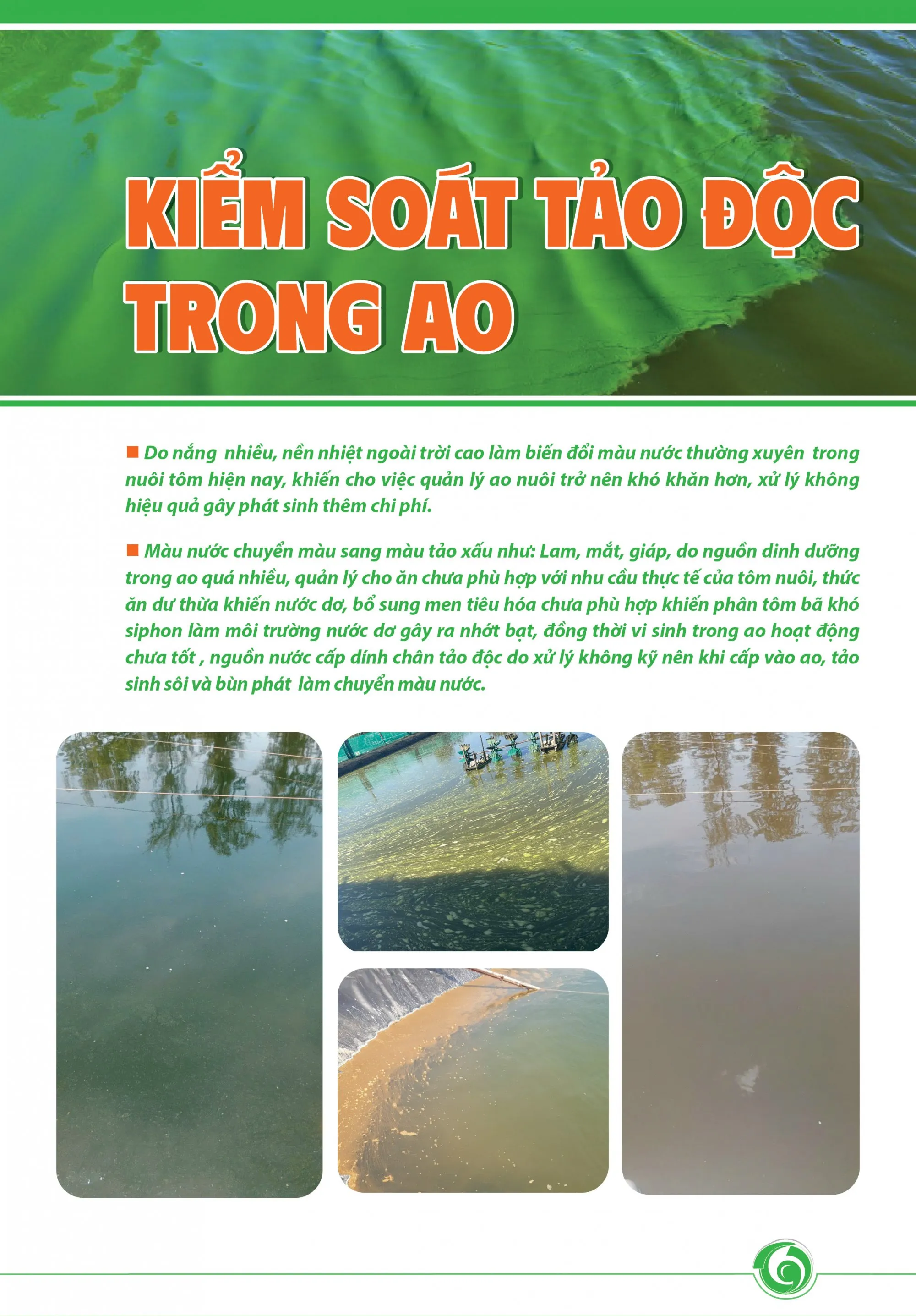
The water color changes to undesirable algal blooms, such as blue-green algae, Euglena, and dinoflagellates. This is attributed to excessive nutrients in the pond, stemming from inappropriate feeding management that doesn't meet the shrimp's actual needs, leading to uneaten feed and dirty water. Inadequate probiotic supplementation also results in shrimp fecal waste that is difficult to siphon, contributing to a dirty water environment and the formation of biofilm on the pond liner. Simultaneously, microbial activity in the pond is suboptimal. Moreover, the incoming water source is contaminated with toxic algal cells due to insufficient treatment; when introduced into the pond, these algae proliferate and sludge accumulates, causing the water color to shift.

ProtocolShrimpJune 10, 2024👁 282 views
Click to listen to an AI-narrated summary
AI Summary

Generate an English summary for CONTROLLING TOXIC ALGAE IN PONDS

AI-generated summary based on the full article content below.

Editorial Framing

Why this article matters

    Full Article
    CONTROLLING TOXIC ALGAE IN PONDS
    KIYM_SOAT_TYO_YYC_TRONG_AO_new
    KIYM_SOAT_TYO_YYC_TRONG_AO_new2
    Quick Q&A

    Frequently asked questions on this topic

    What does "CONTROLLING TOXIC ALGAE IN PONDS" cover?

    The water color changes to undesirable algal blooms, such as blue-green algae, Euglena, and dinoflagellates. This is attributed to excessive nutrients in the pond, stemming from inappropriate feeding management that doesn't meet the shrimp's actual needs, leading to uneaten feed and dirty water. Inadequate probiotic supplementation also results in shrimp fecal waste that is difficult to siphon, contributing to a dirty water environment and the formation of biofilm on the pond liner. Simultaneous

    Which species does this article apply to?

    Shrimp — Water & Environment

    Related Products

    Products linked to this topic

    Product reference for PRO GUT
    shrimpThần Vương Blue

    PRO GUT

    Premium digestive probiotics specifically for shrimp farming in lined ponds

    Product reference for MAX 4000
    tom / ca / ocThần Vương Blue

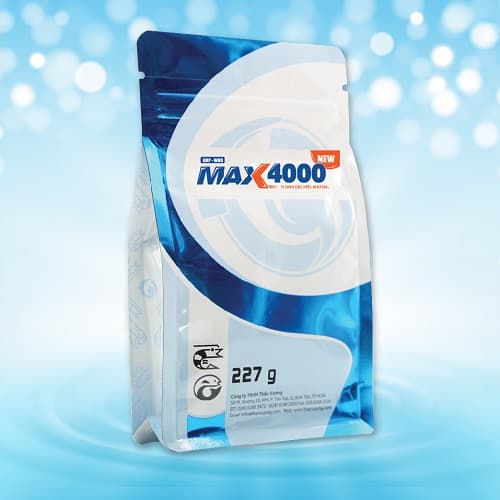
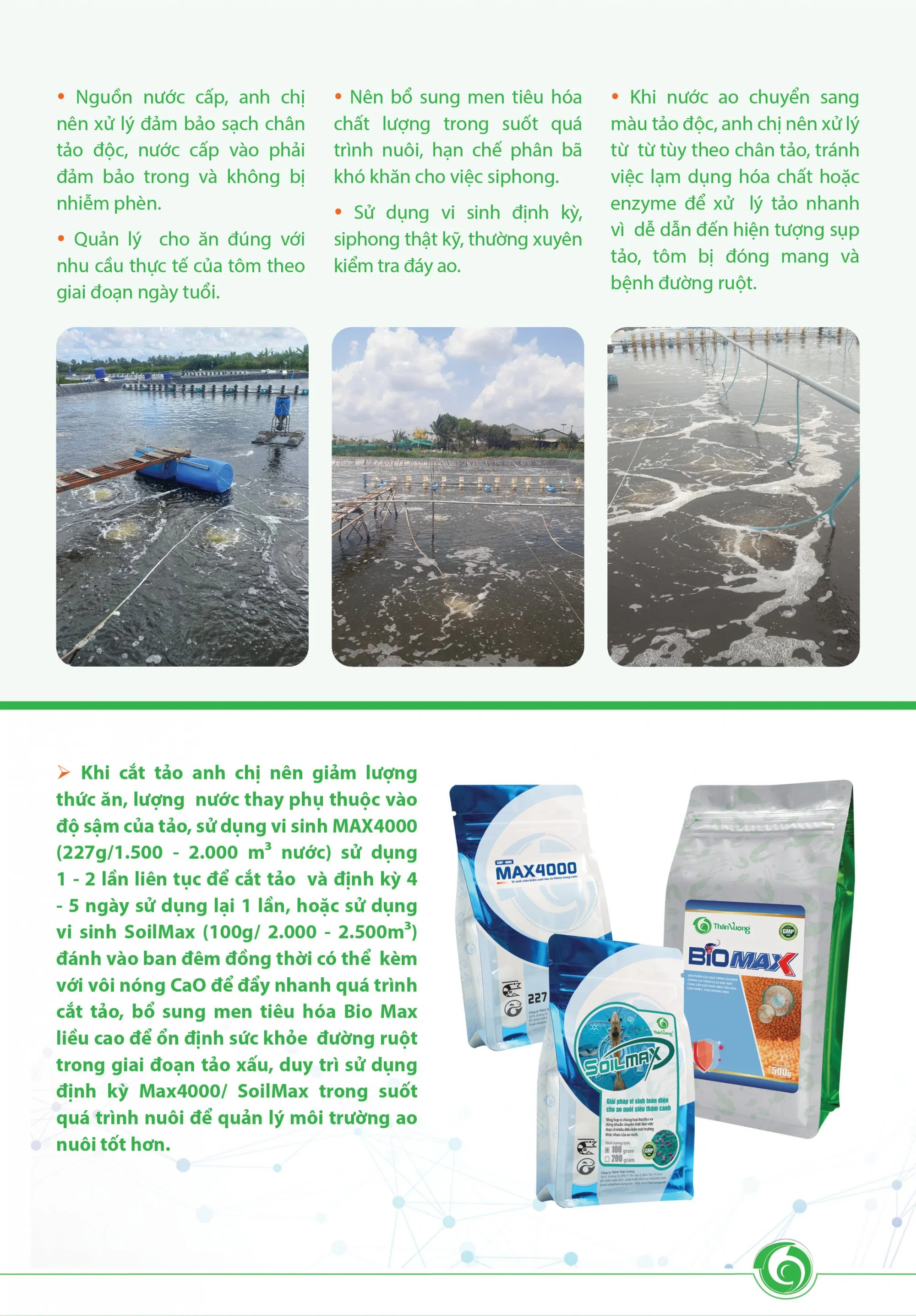
    MAX 4000

    Probiotic for treating toxic gases NH3, H2S, NO2

    Product reference for LALSEA BIOREM
    allNguyên liệu

    LALSEA BIOREM

    Ammonia removal, biological organic treatment, effective at high salinity

    Product reference for HERB GUARD
    shrimpThần Vương Blue

    HERB GUARD

    Enhance liver function, improve color of hepatopancreas

    More Reading

    Related technical articles

    VAI TRÒ CỦA BỔ SUNG NƯỚC ĐIỆN GIẢI CHO TÔM
    Protocol•Shrimp•November 22, 2018

    THE ROLE OF ELECTROLYTE SUPPLEMENTATION FOR SHRIMP

    A recent report published in the journal Aquaculture International has provided further insight into the role of electrolyte supplem[...]

    Toàn cảnh thị trường tôm thế giới 2025 — Dữ liệu từ Shrimp Insights (Tháng 2/2026)
    Technical article•Shrimp•April 9, 2026

    Global Shrimp Market 2025 Overview — Shrimp Insights Bulletin February 2026

    Full-year 2025 global shrimp trade summary: Ecuador leads exports at 1.39M MT (+15%), EU imports surge 21%, US tariff shifts reshape[...]

    SỰ THAY ĐỔI CỦA HỆ VI SINH ĐƯỜNG RUỘT DO SỰ NÓNG LÊN TOÀN CẦU. ĐIỀU HÒA SỨC KHỎE VẬT CHỦ VÀ TÌNH TRẠNG BỆNH Ở ĐỘNG VẬT BIẾN NHIỆT
    Research Insight•Shrimp•February 28, 2026

    CHANGES IN GUT MICROBIOTA DUE TO GLOBAL WARMING. REGULATING HOST HEALTH AND DISEASE STATUS IN POIKILOTHERMIC ANIMALS

    Global warming alters the gut microbiota of Pacific whiteleg shrimp by restructuring enterotypes, increasing the risk of diseases su[...]

    Ask Than Vuong

    Aquaculture technical assistant

    Hello there 👋

    Describe your pond issue or pick a question below.