In aquaculture systems, microbial communities play a crucial role in providing supplementary feed, enhancing nutrient utilization efficiency, reducing anoxia, and minimizing environmental impact. Several forms of Silicon (Si) are commonly found in natural water, such as monosilicic acid and polysilicic acid. This study aims to evaluate the concentrations of these acids in shrimp ponds and determine their effects on the development of pond water microorganisms.
Over the past decade, Silicon (Si) has been recognized as an essential trace element in the metabolism of higher animals and plants, particularly important for immune system induction. Additionally, Silicon is involved in activities such as sugar formation, DNA stabilization, and transport regulation. Si is commonly found in natural water in several forms, such as monosilicic acid, polysilicic acid, and organosilicon compounds. However, plants only absorb Si in the form of monosilicic acid.
In aquatic systems, Si is recognized as an important nutrient for diatoms. The dominance of diatoms in shrimp ponds is highly desirable due to their nutritional characteristics. When diatoms are present, the biochemical composition of shrimp is characterized by higher protein, lipid, essential amino acids, and unsaturated fatty acids. Furthermore, using minerals containing Silicon is a common way to stimulate diatom growth.
Major problems faced by shrimp farming are infectious diseases and environmental degradation. Probiotics are used as an effective method to overcome these challenges. Probiotics improve growth performance, stimulate immune responses, enhance shrimp disease resistance, inhibit pathogen growth, and improve water quality parameters. Probiotics typically include various types of bacteria, bacteriophages, microalgae, and yeasts. Knowledge of the relationship between Si utilization rates and the concentrations of mono- and polysilicic acids in pond water, the rate at which Si disappears from the water, and the relationship between mono- and polysilicic acid concentrations and microbial development is crucial for managing microbial communities. Therefore, this study aims to evaluate the concentrations of monosilicic and polysilicic acids in shrimp ponds and determine the effect of monosilicic acid on the development of microorganisms in pond water.
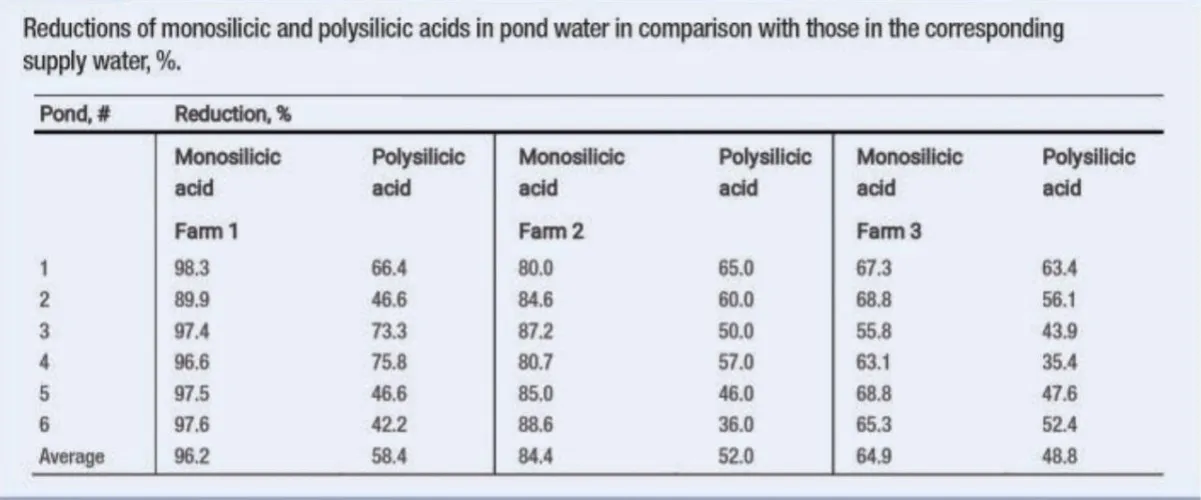
It was observed that Si in pond water decreased very rapidly, despite daily water changes. The content of monosilicic acid decreased more significantly than polysilicic acid (Table 1). It is well-known that higher plants only absorb Si in the form of monomeric silicic acid. Perhaps algae, being photoautotrophs like higher plants, have the same mode of Si absorption. As monosilicic acid gradually decreases, the equilibrium between the dissolved forms of Si shifts, leading to accelerated depolymerization, characteristic of systems with low monosilicic acid concentrations, thereby resulting in a decrease in polysilicic acid. The correlation coefficient between dissolved Si forms and cell abundance provides evidence that the number of microorganisms in the pond is positively correlated with monosilicic acid (R = 0.80-0.84) (Table 2)
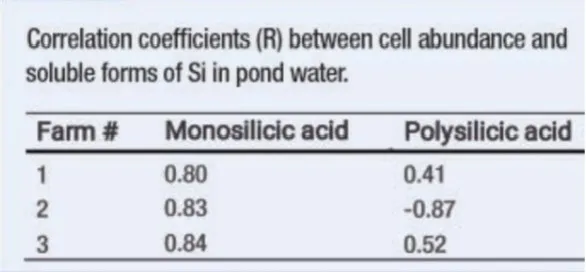
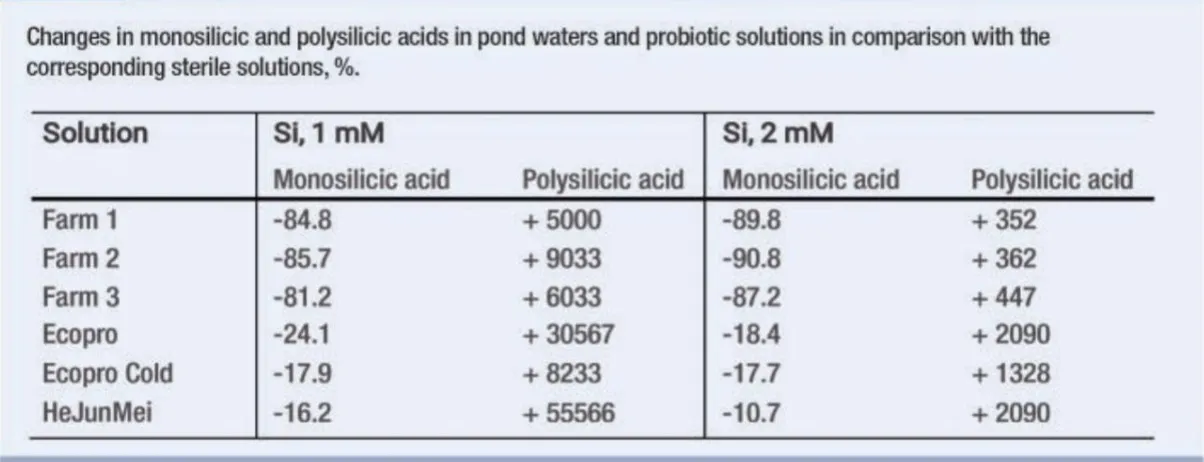
There was no correlation between bacterial abundance and polysilicic acid. Therefore, unlike polysilicic acid, monosilicic acid is an essential factor in regulating microbial development in shrimp ponds. In vitro experiments have shown that monosilicic acid affects beneficial microbial populations in pond water (Table 3).
In pond water, Si can be primarily consumed by various algal species, including diatoms. Some researchers conclude that Si polymers often have high adsorption properties for organic and inorganic molecules. Therefore, newly formed silica gel can adsorb organic compounds and nutrients, promoting microbial attraction and floc formation. This hypothesis requires further confirmation.
When Si concentrations in shrimp ponds decrease, other algal species that do not require as much Si can proliferate, replacing diatoms (Boyd, 2014). Among undesirable algal species, cyanobacteria are of particular concern. Cyanobacterial blooms cause anoxia, toxin formation, thereby degrading water quality and reducing shrimp productivity (Jescovitch et al., 2018). Supplementing silicic acid to shrimp ponds is an essential requirement to create a suitable environment for diatom growth.
Monosilicic acid applied to shrimp pond water or probiotic solutions significantly increases the abundance of microbial cells. It is important to distinguish between monomeric forms and polymeric compounds of Si, as these substances affect microbial populations in aquaculture in different ways.
According to Aquaculture magazine