BAP changes the rules: the full picture of SPS 6.0, Feed Mill 3.3 and the new Cluster Program
The two previous parts answered the question "Who is GSA?". This part is a detailed map of what is changing: a completely rewritten processing standard, a feed standard with a roadmap to 2030, a new certification program for small farms — and some very specific deadlines.
01SPS 6.0 — the processing plant standard rewritten as "1 core + 10 modules"
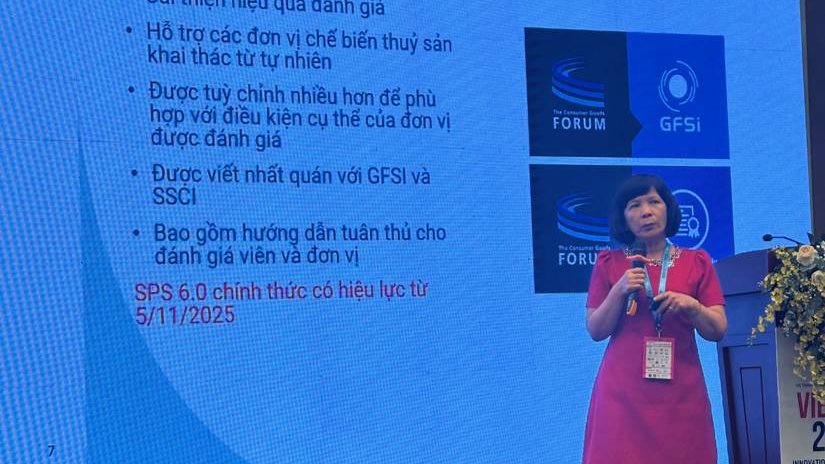
The Seafood Processing Standard (SPS) 6.0 has been in effect since November 5, 2025 — the standard was launched in 2004 and applies to both farmed and wild-caught seafood. Version 6.0 improves audit efficiency, supports processors of wild-caught products, can be tailored to the conditions of each facility, and is written to be consistent with GFSI and SSCI. The new structure: one set of core clauses for everyone + 10 modules — of which Social Responsibility (2A) is mandatory, while the other modules are chosen according to the scope of production (as published on bapcertification.org).
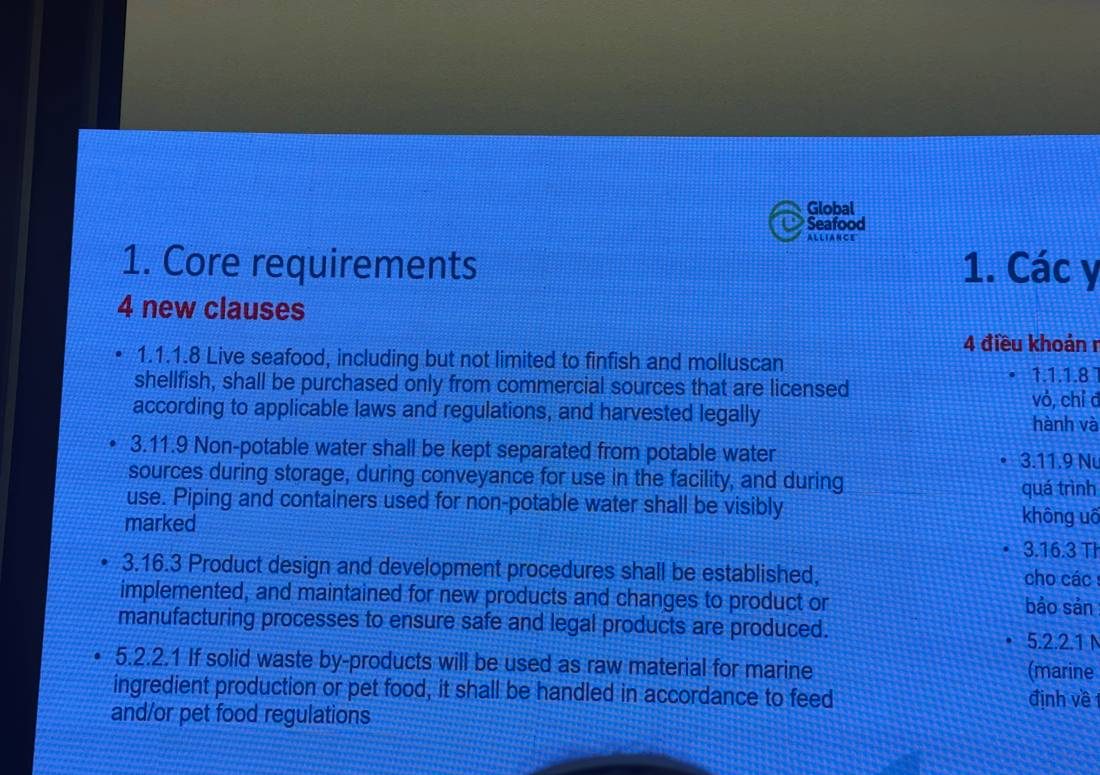
The core has 4 new clauses: live seafood may only be bought from licensed commercial sources and must be legally harvested (1.1.1.8); non-potable water must be kept separate, with clearly marked pipes (3.11.9); there must be a procedure for designing and developing new products (3.16.3); solid by-products used as marine ingredients/animal feed must follow feed regulations (5.2.2.1).
Plus 11 revised clauses: the QMS adds Food Safety Culture (2.1.1); evaluating the effectiveness of HACCP training (2.4.3); risk assessment of banned substances (3.2.1); sanitation verification including Listeria spp in drains + SPC, Enterobacteriaceae (3.9.4); reduced heavy-metal testing of water/ice from 2 to 1 sample/year (3.11.1, 3.11.4); reduced Coliform testing from weekly to monthly (3.11.2, 3.11.7); a risk-based sampling plan (4.4.1); no use of non-accredited laboratories (4.5.1); corrective action when limits are exceeded (4.5.2). Low-risk areas are relaxed, high-risk areas are tightened — true to the spirit of risk-based assessment.
02Ten modules — which plant needs which module?
Ready-to-eat foods (RTE) — a new module, 20 clauses (RTE1–RTE20), 12 new clauses. It reduces cross-contamination for products eaten without further cooking: sashimi, surimi, pasteurized crab, hot/cold-smoked fish, acidified products, salted products. New content: disinfection of cooling water, control of factors that support Listeria monocytogenes, separate protective clothing and footwear for the RTE area, laundry, maintenance training, environmental monitoring including Listeria, SOPs to prevent pathogens, personal hygiene.
Animal welfare — mandatory for plants that receive live aquatic animals and slaughter them at the plant; 11 clauses (AW1–AW6): a transport SOP that ensures welfare (AW1); a transport log for every delivery, reviewed by management at least weekly (AW2); an SOP for holding live animals + corrective actions (AW3); a slaughter SOP, with verification of stunning effectiveness (AW4–AW5); all workers involved in transport, stunning and slaughter must be trained, with documentation (AW6).
Social responsibility — two options: the mandatory 2A, or the enhanced 2B (ESM) — an optional additional audit of management systems and practices for workers, so that plants are recognized for going further. Low-acid foods (canned, pH > 4.6, Aw > 0.85): 9 clauses to control Clostridium botulinum, Listeria monocytogenes. Outsourced processing: 12 clauses (OSP1–OSP11) — outsourced filleting, packing, freezing, cold storage and deboning are all in scope; products must return to the main facility and remain under full control. Product identity preservation: PIP1–PIP10 for facilities that claim multiple BAP stars; new: PIP7 forward and backward traceability of star-rated products, PIP10 excluded products may not use the BAP logo. Wastewater discharge (Effluent Discharge) for facilities that treat their own wastewater; and Environment for remote, isolated wild-catch processing plants: 15 clauses + a table of effluent parameters, including processing vessels.
03The Testing module — the biggest change: Vietnam enters the "elevated risk" group
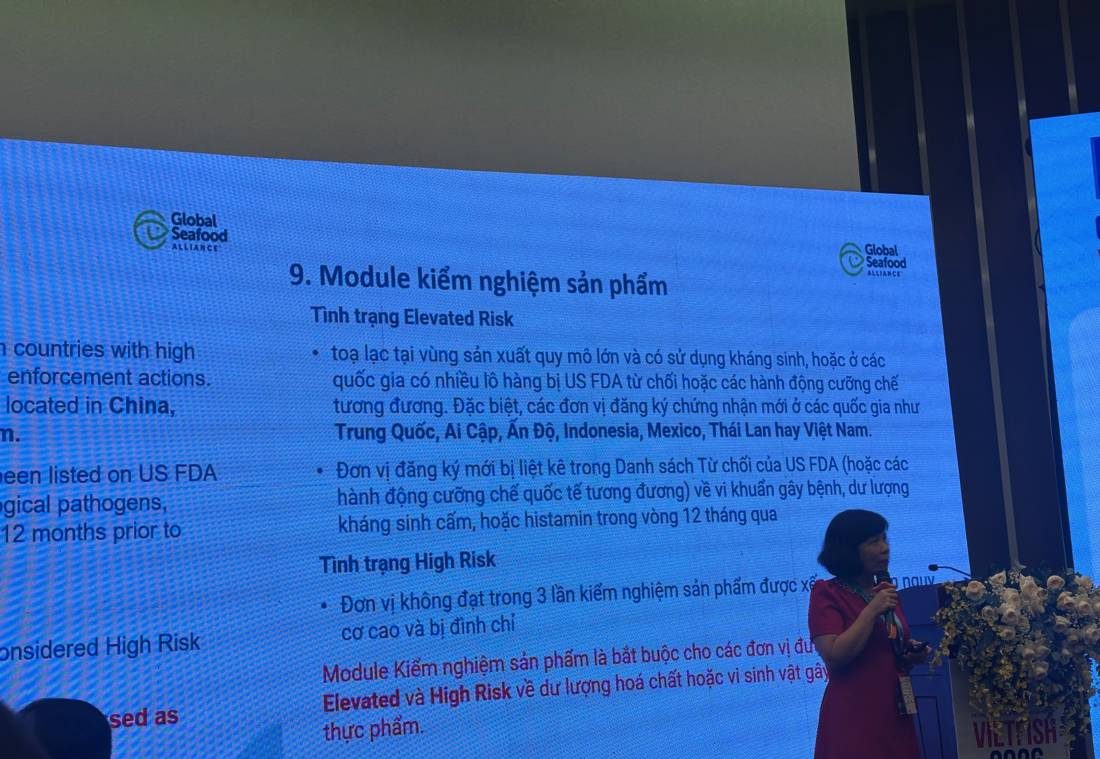
Product testing moves to a risk-based ranking: Low — Elevated — High, based on 4 criteria: certification status (new/re-certification), geographic location, regulatory compliance/enforcement, testing results. Appendix 1 gives testing guidance; GSA assesses the risk directly.
Facilities in large-scale production regions that use antibiotics, or in countries with many shipments refused by the US FDA — especially newly registered facilities in China, Egypt, India, Indonesia, Mexico, Thailand or Vietnam — are ranked Elevated. Having appeared on the US FDA Refusal List (pathogenic bacteria, banned antibiotics, histamine) within 12 months: High. Failing 3 consecutive tests: suspension. Elevated and High: testing for chemical residues and food-poisoning microbes is mandatory. A clean record of drug use from the pond is the cheapest shield.
Lower-risk regions
Regions with good enforcement systems, not on the US FDA refusal list in the last 12 months.
Mandatory residue testing
Large-scale production regions that use antibiotics, or countries with many shipments refused by the US FDA.
Strictest oversight
Facilities newly registered after appearing on the US FDA refusal list (pathogenic bacteria, banned antibiotics, histamine) within 12 months.
04Feed Mill 3.3 — feed mills and the 75 — 90 — 100% roadmap
Version 3.3 was published on September 8, 2025 and took effect on November 17, 2025, with applications submitted through Prism. The 7-part structure is unchanged; the changes are concentrated in clauses 4.5–4.11 (sustainability of the main ingredients: fishmeal, fish oil, soy, palm oil) and 7.3 (traceability).
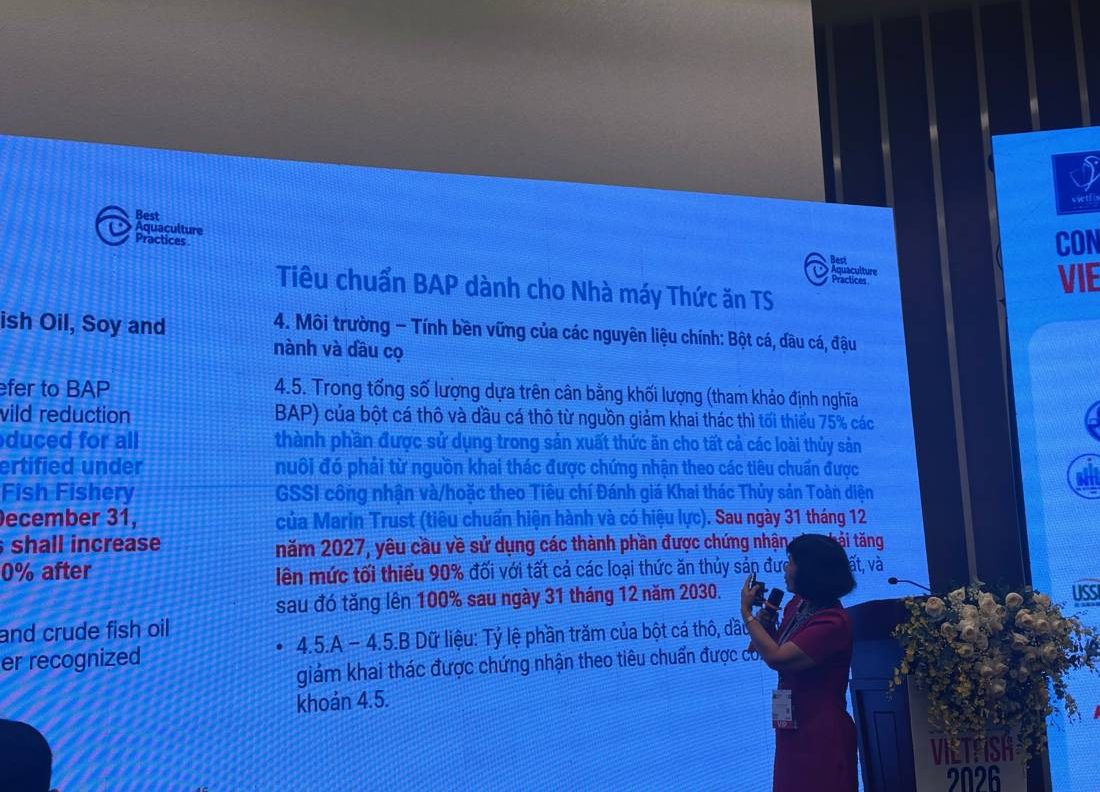
Fishmeal and fish oil from wild fisheries: at least 75% (mass balance) must hold a GSSI-recognized certification and/or meet the Marin Trust Criteria; 90% from 2028; 100% from 2031 (4.5 — consistent with the official GSA announcement). The remainder must come from an active, approved Fishery Improvement Project (FIP) — Marin Trust, MSC IP, FisheryProgress.org (4.6); by July 1, 2027, any remaining shortfall must be backed by evidence of active participation in a FIP (4.7). By-products: non-threatened species, legally harvested (4.8).
Soy: at least 50% by mass balance from ProTerra, RTRS, SSAP or FEFAC-benchmarked sources (4.10); from January 1, 2026, a written commitment is required to buy soy that is 100% certified or verified DCF — no deforestation, no land conversion (4.10.1). Palm oil: RSPO certification (4.11). Traceability records under 7.3: ingredient type, species and FAO area, date received, supplier, production facility, unloading activity, quantity, lot size.
05Cluster Program 1.3 — a wide door for small farms
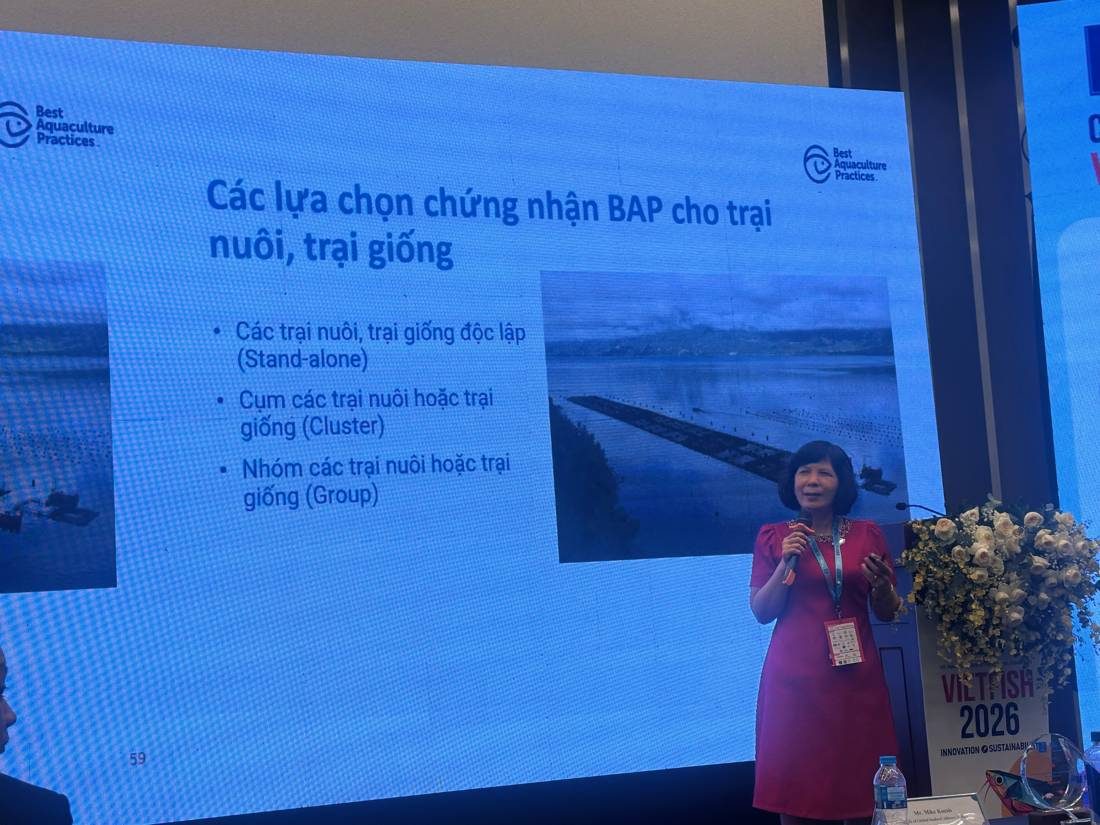
Issued on August 28, 2025, replacing version 1.2 from 2019. Three options: independent (10 farms = 10 applications, multiple audits, costly); cluster — a sponsoring organization (a cooperative, a lead company in the supply chain) coordinates: one certification body, one auditor, one audit for the whole cluster, no shared QMS required; group — with a Group entity, a Manager, a shared QMS and internal audits, the number of members audited on site drops sharply under a square-root formula, suitable for any scale, species or farming method.
Changes in 1.3: the separate checklist is dropped; the name of the manager/owner of each unit must be provided; the exception on the maximum number of units in a cluster is removed; facility boundaries must be submitted (KMZ file); the separate exception for mollusk clusters is removed; competence requirements for the cluster coordinator — organization, communication, English, problem solving.
Each farm handles everything on its own
1 audit
1 audit
1 audit
1 audit
1 audit
1 audit
1 audit
1 audit
1 audit
1 audit
One focal point coordinates the whole cluster
06Prism and the responsible feed commitment
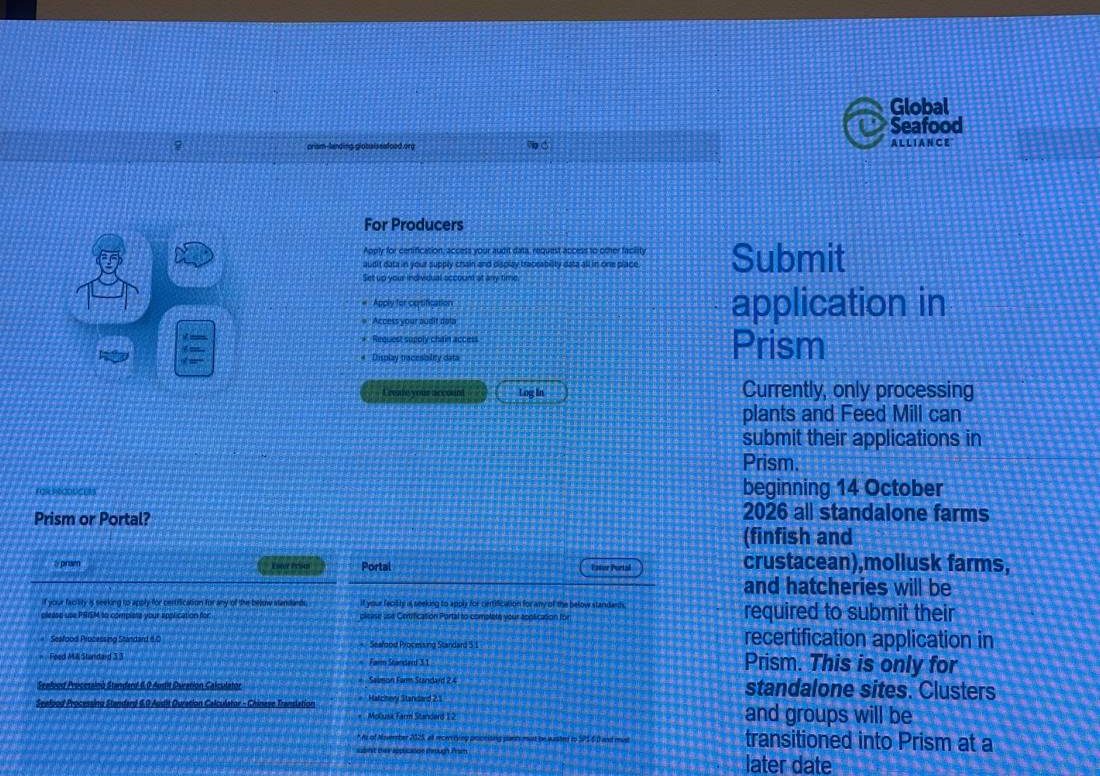
Currently only processing plants and feed mills submit applications through the online Prism platform; from October 14, 2026, all independent farms (finfish, crustaceans), mollusk farms and hatcheries must submit re-certification applications through Prism — this applies only to independent facilities; clusters and groups will switch over later. GSA has also launched a "Responsible Feed Commitment" page that brings together its guidance on sustainable ingredients.
November 5, 2025 SPS 6.0 · November 17, 2025 Feed Mill 3.3 · January 1, 2026 DCF soy · October 14, 2026 Prism · July 1, 2027 FIP · 2028→2031 fishmeal 90%→100%. Those who read early will not have to sprint at the last minute.
SPS 6.0 takes effect
New version of the processing plant standard
Feed Mill 3.3 takes effect
Aquafeed mill standard
DCF soy
Written commitment: 100% certified / no deforestation, no land conversion
Prism becomes mandatory
Independent farms & hatcheries submit re-certification applications online
FIP participation deadline
For fishmeal and fish oil sources not yet certified
Sustainable fishmeal and fish oil
75% now → 90% from 2028 → 100% from 2031

Digitize your farm records with Nuôi Lời
Log feed, water conditions, cast-net sampling, medicines and costs right at the pond; export multi-sheet Excel reports that support traceability records in line with ASC and GMP — exactly what standards like BAP are asking for. Free, sign in with your phone number, no email needed.
Try Nuôi Lời →