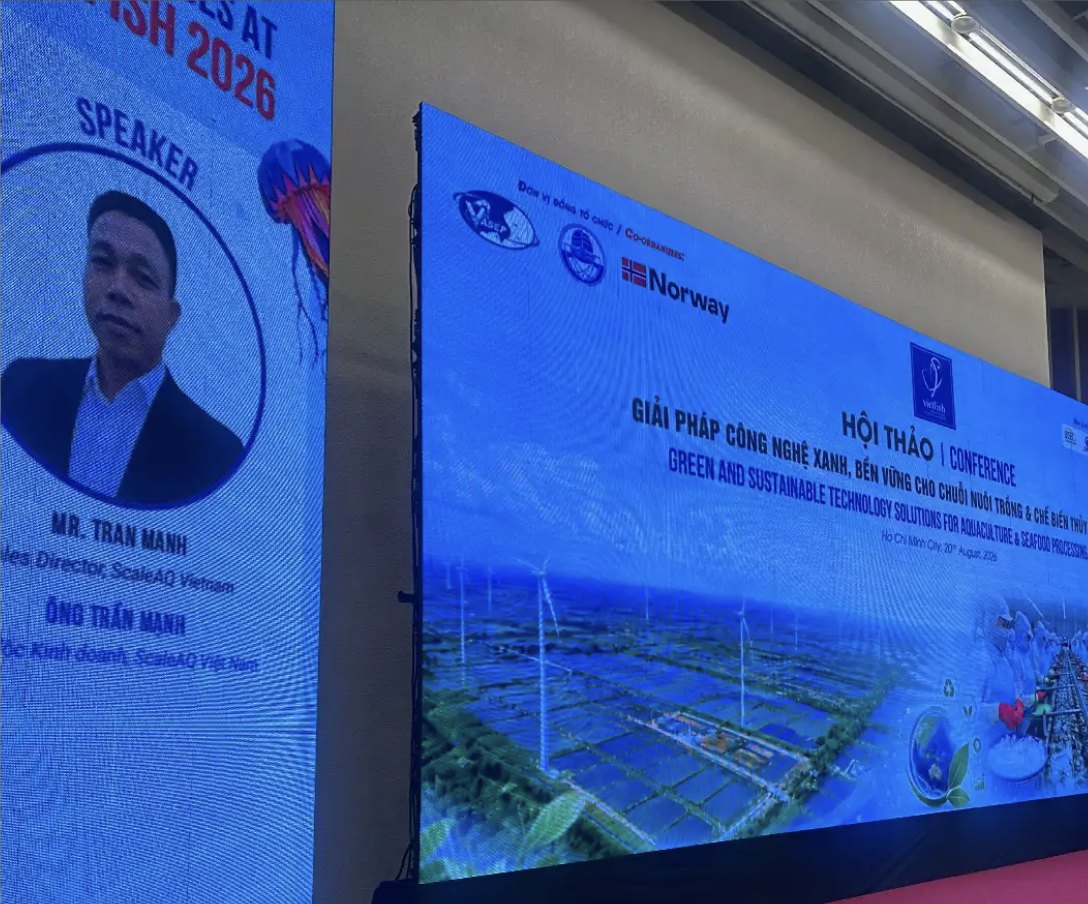
What did the Norwegians bring to VietFish? Vaccines, data and technology that turns by-products into money
The previous three parts revolved around one question: how far are international standards tightening? This part answers the reverse question: with standards this tight, what can we use to meet them? The session series "Green and sustainable technology solutions for aquaculture & seafood processing", co-organized by Norway, gave the answer in figures — from a vaccine trial on 106 pangasius ponds in the Mekong Delta to technology that turns fish by-products into a product worth twice the price.
01Pangasius vaccine: 106 ponds, 240 days, and three numbers worth reading slowly
The most notable presentation for pangasius farmers came from the study "Vaccination reduces disease and antibiotic use in pangasius" by the team of Trần Minh Phú, Nguyễn Thanh Phương and Võ Nam Sơn (Can Tho University) with colleagues from the University of Copenhagen and ICARS (Denmark), presented at the session together with Mr. Nguyễn Trường Phúc — Manager Aquatic Health Vietnam, PHARMAQ Vietnam.
The design is rigorous to a degree rarely seen at field scale: 106 grow-out ponds were randomly assigned to a vaccinated group (56 ponds) and an unvaccinated group (50 ponds), and monitored continuously for 240 days for disease, survival and production indicators.
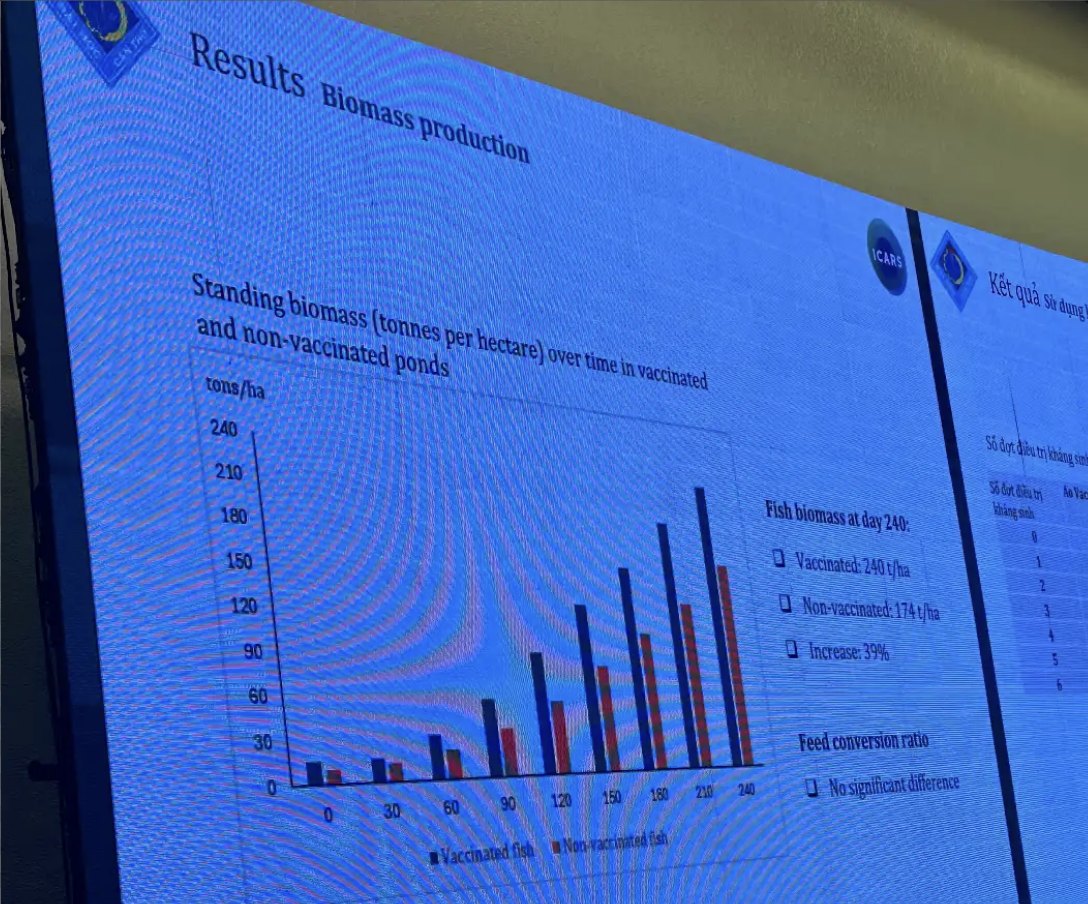
The results, according to the slides presented at the conference: fish biomass at day 240 reached 240 tonnes/ha in vaccinated ponds versus 174 tonnes/ha in unvaccinated ponds — 39% higher. Antibiotic use was 7.88 mg/kg of fish versus 20.2 mg/kg — 61% lower. There were clearly fewer high-mortality disease outbreaks per pond, while FCR did not differ significantly between the two groups. The two most common diseases in the study: bacillary necrosis, BNP (Edwardsiella ictaluri), and hemorrhagic disease, MAS (Aeromonas hydrophila/dhakensis).
02qPCR: knowing ahead when a pond is about to break out, to decide whether to vaccinate or wait
Alongside the vaccine comes a diagnostic tool. PHARMAQ presented a Real-time PCR (qPCR) protocol that detects E. ictaluri in pangasius, developed in four steps: building the protocol, assessing how the infection progresses from clinical signs, field validation on real farms (in cooperation with Fresh Studio Aqua Lab Cần Thơ), and only then recommending it for use.
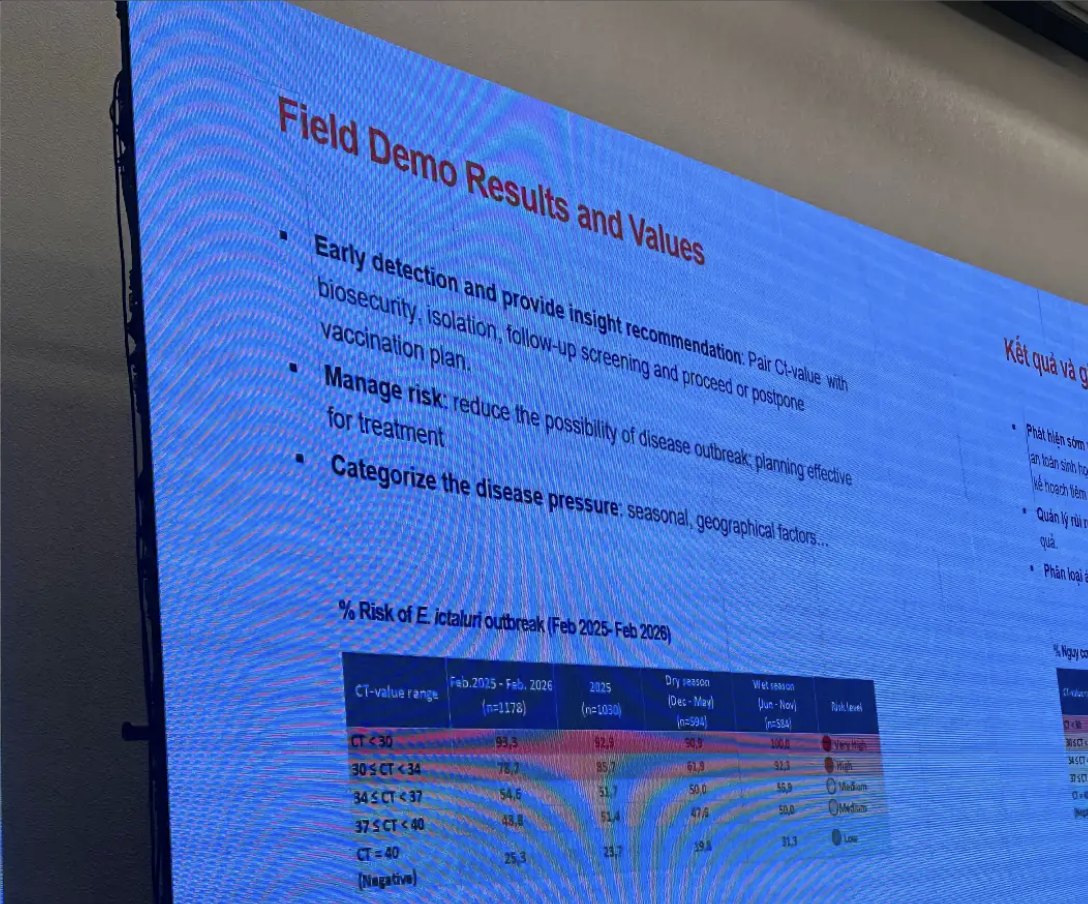
The useful part is that results are read by Ct value — a figure that indicates the pathogen load in the sample. Field data from February 2025 to February 2026 on the slide show that Ct is closely tied to outbreak risk: samples with Ct ≤ 30 (heavy pathogen load) carry a risk of a BNP outbreak above 90%, falling step by step with each Ct band, down to only about 20–25% in the negative group. Farmers can test first, know what level of disease pressure a pond is under, and then go ahead with or postpone the vaccination plan, tighten biosecurity, isolate and re-screen — instead of waiting until the fish stop eating and their skin darkens before reacting.
Fish darken, eat noticeably less
The golden window for testing and intervention
Lethargic, red spots around the eyes and mouth
Kidney — spleen — liver swollen, necrosis, internal hemorrhage. Treatment at this point is already one step too late
Fish resume feeding
Some fish still have white spots on the liver — the pathogen is still in the pond
03Feed: FCR is where most of the money is
Two presentations on feed and farming technology pointed to the same place: FCR. Mr. Duco Onnes — Director of Nutreco Vietnam (the parent group of Skretting) — framed it in terms of sustainability: better feed formulas lower FCR, which means less feed, less waste and a lower environmental footprint per kg of seafood. Skretting reported 98% certified marine ingredients and 97% deforestation-free soy — exactly the criteria that Feed Mill 3.3 will soon require across the industry. Of note for dealers and farmers is the "working alongside farmers" model: feed management training, water quality support, disease prevention programs, demonstration farms — selling through technical service, not through discounts.
Mr. Trần Mạnh — Sales Director of ScaleAQ Vietnam — gave more concrete figures, with precision feeding systems and monitoring cameras as the tools (ScaleAQ says it has installed more than 4,000 feeding systems, 10,000 camera systems and 18 feed barges worldwide). He also set out a three-step roadmap for marine farming in Vietnam: change mindsets first, validate with 3–4 pilot farms along the coast, and only then scale up once technical and economic performance has been proven.
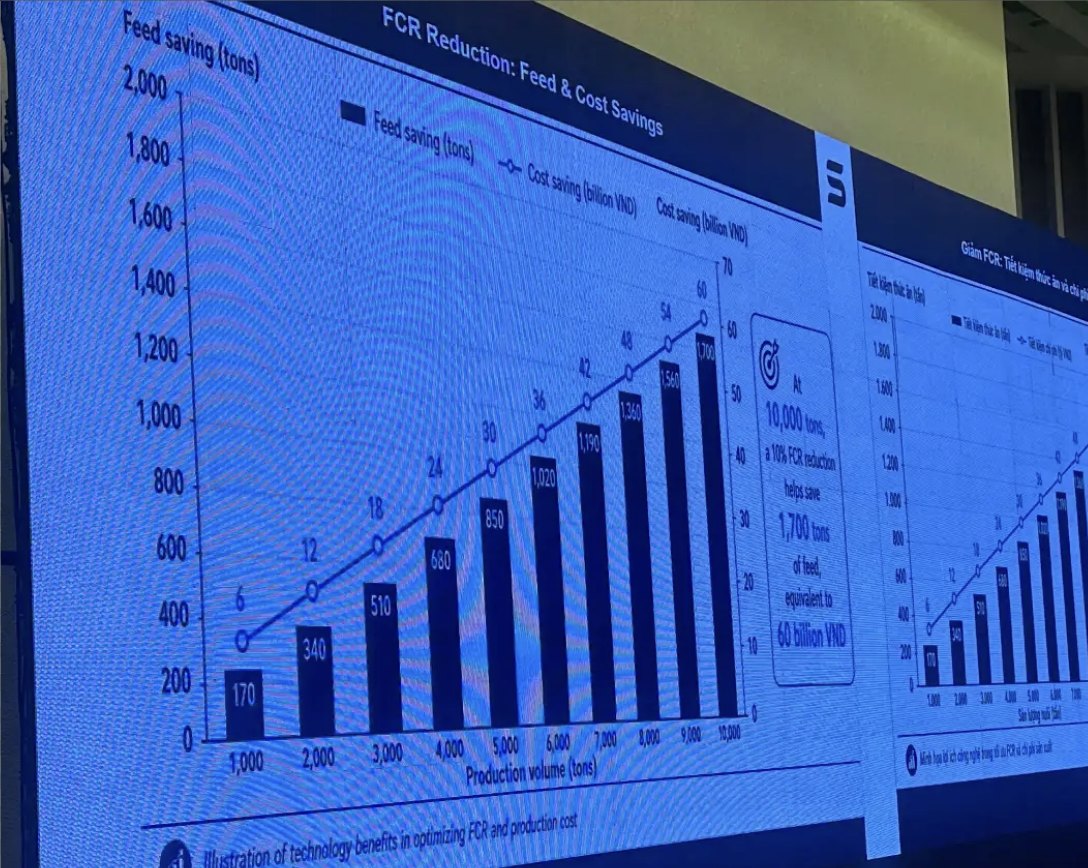
According to the ScaleAQ slide: cutting FCR by 10% at a scale of 10,000 tonnes of fish saves 1,700 tonnes of feed — estimated to be worth VND 60 billion. That is 170 tonnes of feed for every 1,000 tonnes of fish.
04Processing: automation ahead of animal welfare rules, by-products out of the "commodity trap"
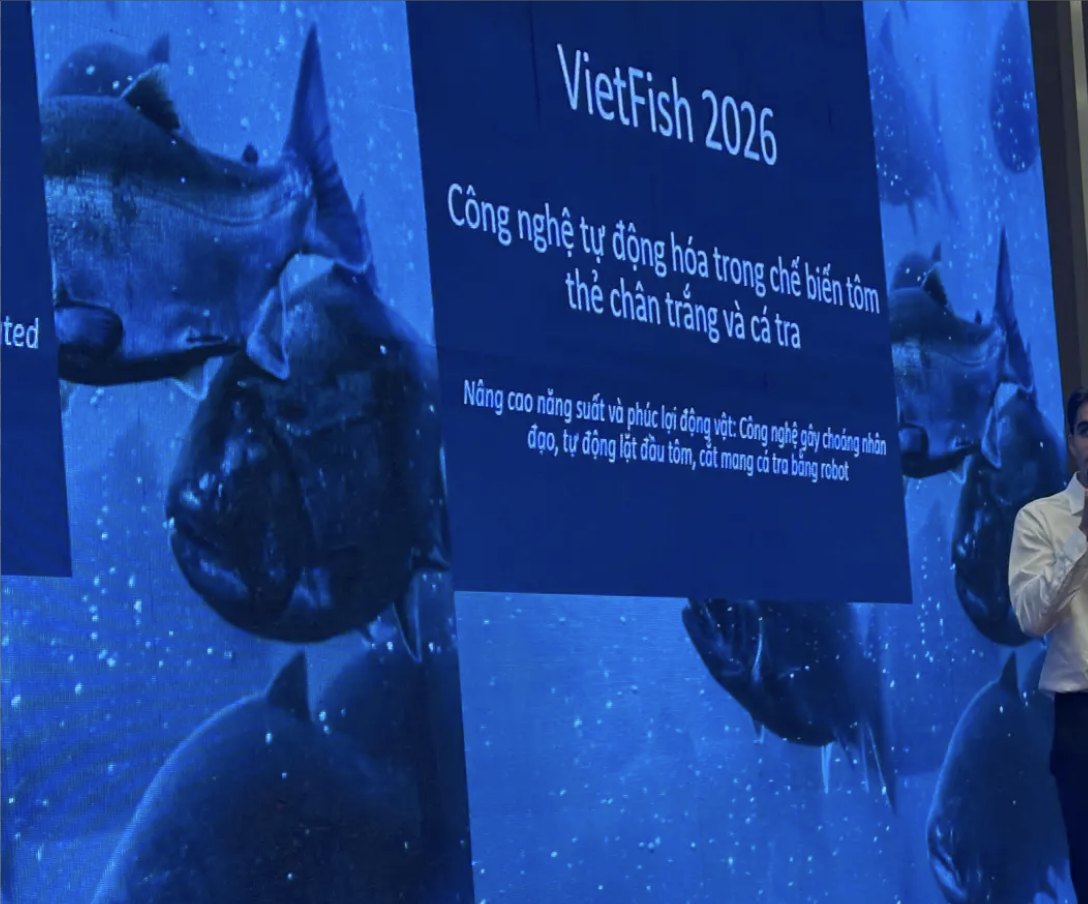
After harvest, Mr. Filip Fleischer (Optimar AS, Norway) showcased a trio of technologies for whiteleg shrimp and pangasius processing plants: humane stunning, automatic shrimp de-heading machines and robots that cut pangasius gills — raising productivity while improving animal welfare. Anyone who has read Part 3 will see the timing at once: SPS 6.0 has just made the Animal Welfare module (AW1–AW6) mandatory for plants that receive and slaughter live aquatic animals — investing in stunning technology and standardized slaughter today is preparing the audit file for tomorrow.
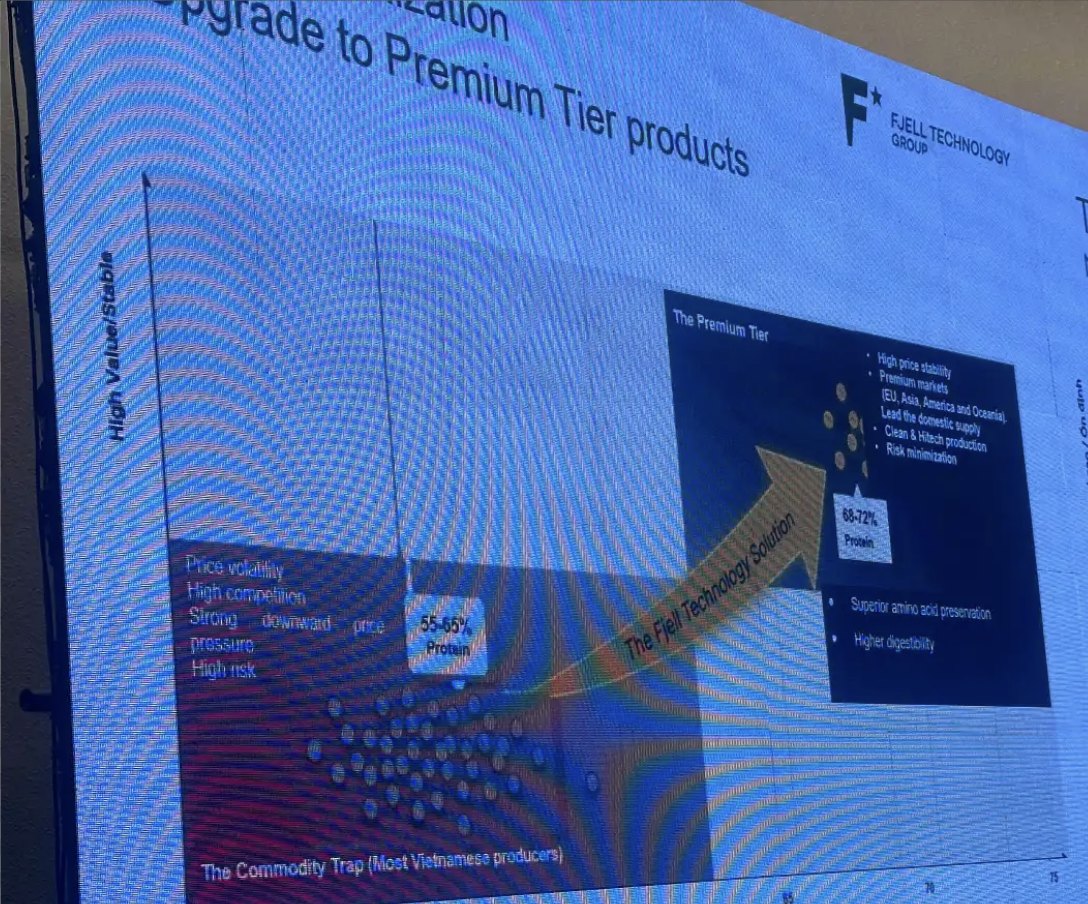
The presentation by Mr. Leif Gunnar Madsen (Fjell Technology Group) hit a different sore point: the selling price of fishmeal. Fjell's slide splits the market into two tiers — the "commodity trap", where most Vietnamese producers now stand, with 55–65% protein fishmeal selling at around 0.9–1.2 USD/kg protein, fierce competition and constant downward pressure on prices — and the "premium tier" with 68–72% protein, priced at 2.0–2.5 USD/kg protein for markets in the EU, Asia, the Americas and Oceania. The technology they offer for moving up: two-stage disc dryer lines that reuse the drying vapor, with a total energy input of about 250 kWh per tonne of raw material, fishmeal plants with a capacity of 200–750 tonnes/day, and tuna by-product processing lines with dry bone separation at 40–100 tonnes/day. The message in short: fish by-products are not waste — processed with the right technology, they become a product worth twice the price.
05And the longest-term story of all: people
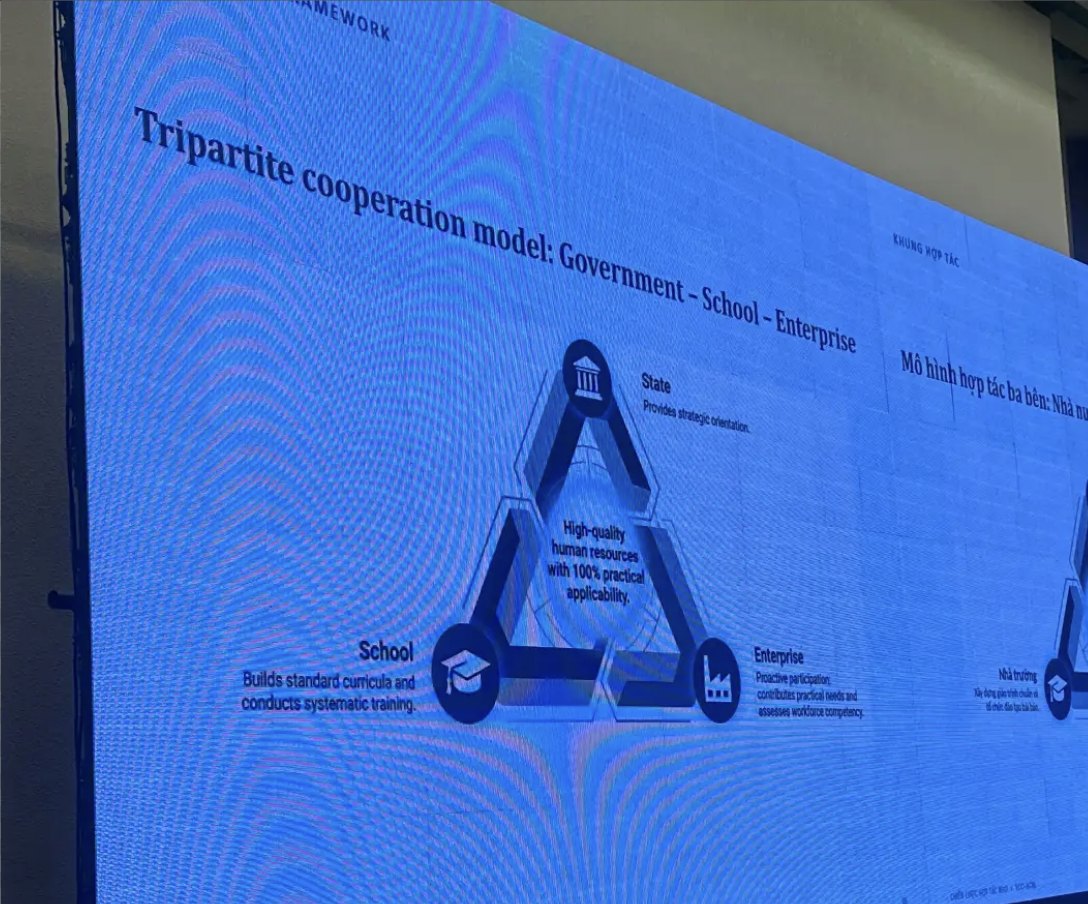
Opening the whole session series, Mr. Reinaart Pretorius — Director of the International Cooperation Program of the Confederation of Norwegian Enterprise (NHO ICP) — introduced a Vietnam – Norway cooperation program to train highly skilled workers for the seafood sector, under a three-party model: the State sets the strategic direction, Schools build standard curricula and provide thorough training, and Businesses ensure practical relevance — the goal being a workforce that meets international standards with 100% practical applicability. The context matches the direction at home: Vietnam is shifting from wild capture and small-scale coastal farming to sustainable industrial marine farming, and Norway chose Vietnam for its long coastline, its 2021–2030 marine economy strategy and its central position in Southeast Asian supply chains.
06Conclusion: the common thread running through all four parts
Put this part next to Part 3 and you see two halves of the same picture. International standards are tightening in exactly three places: antibiotic residues, sustainable feed ingredients and animal welfare. And the Norwegian session series showcased tools for exactly those three places: vaccines together with qPCR to cut antibiotics while the fish still grow faster, certified feed together with precision feeding technology to lower FCR, and humane slaughter automation and by-product technology so that plants both meet the standards and gain an extra source of revenue.