Who is GSA — and why its certification runs from the feed mill to the dinner table
Opening the GSA seminar series at VietFish 2026, CEO Mike Kocsis devoted his entire presentation to a question that many Vietnamese farmers and companies still ask when they see the blue fish logo on a package: who exactly is the Global Seafood Alliance, what does it do — and how is its certification any different from a sticker?
01Vision: responsible seafood nourishing the world
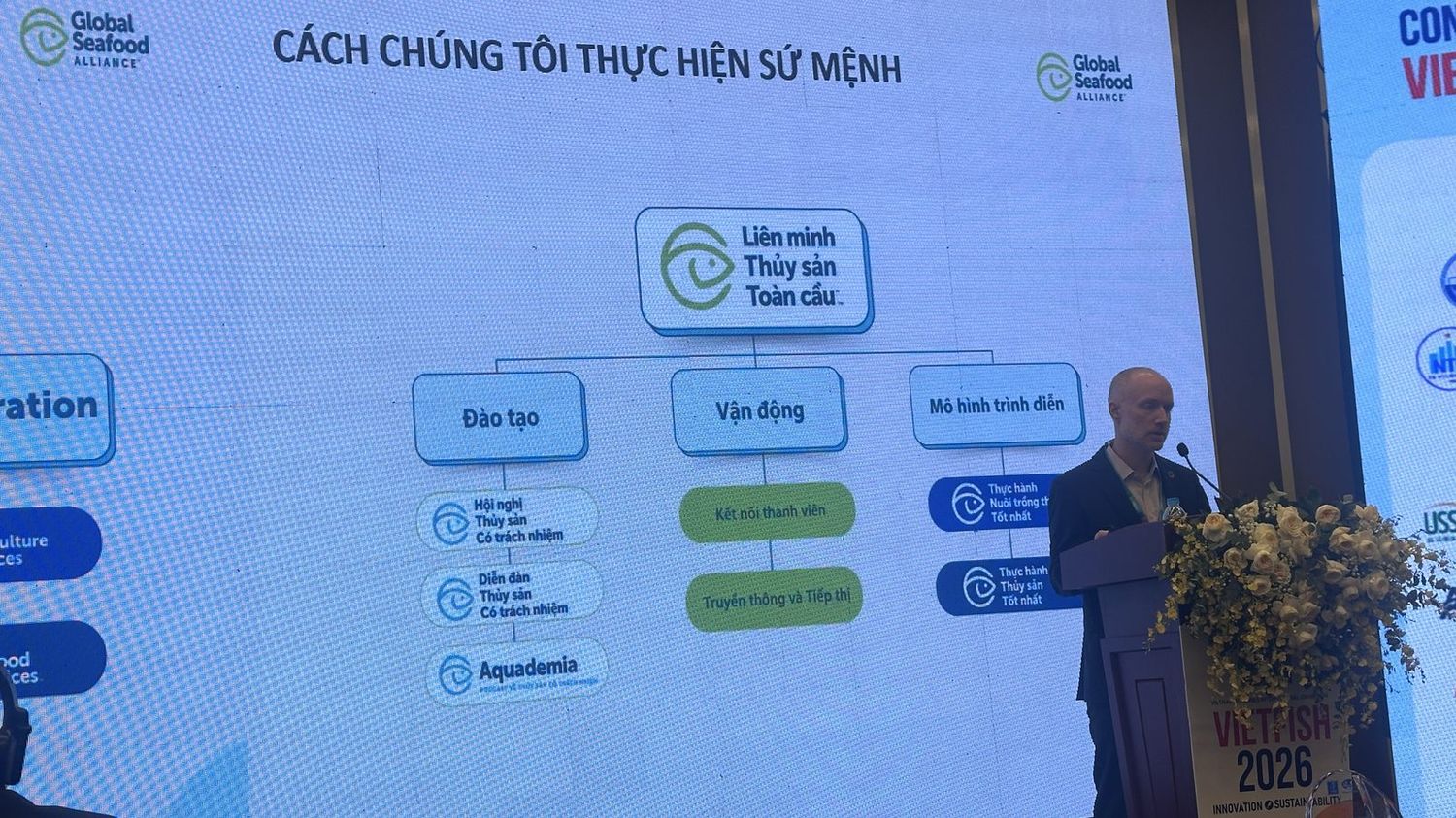
Kocsis opened with the organization's vision: "A world that embraces the role of responsible seafood in meeting global nutrition needs." The key word is "responsible" — GSA does not trade in seafood; its mission is to advance responsible seafood practices worldwide, through three pillars: education, advocacy and demonstration.
02Three pillars — and where the two certification programs fit
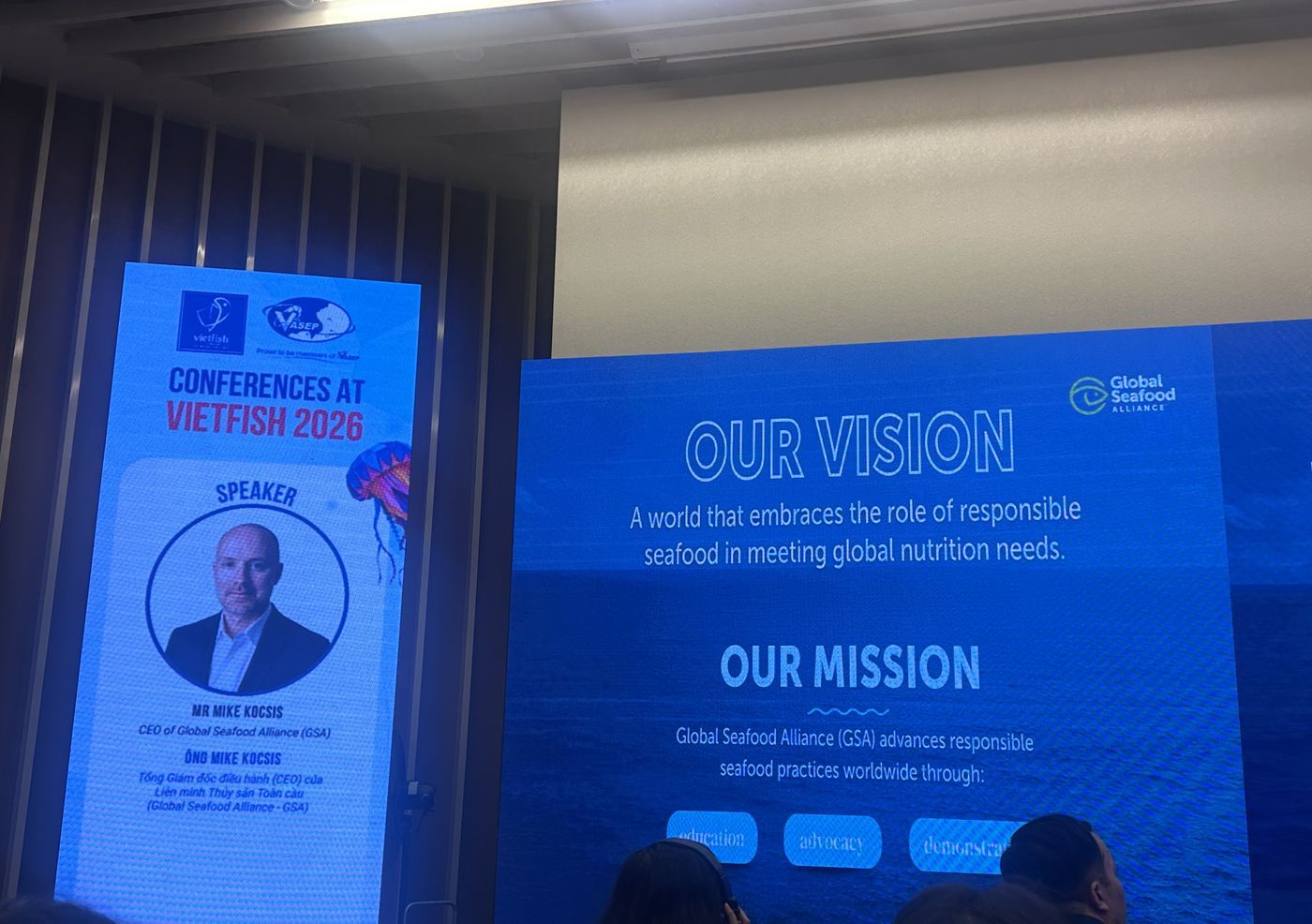
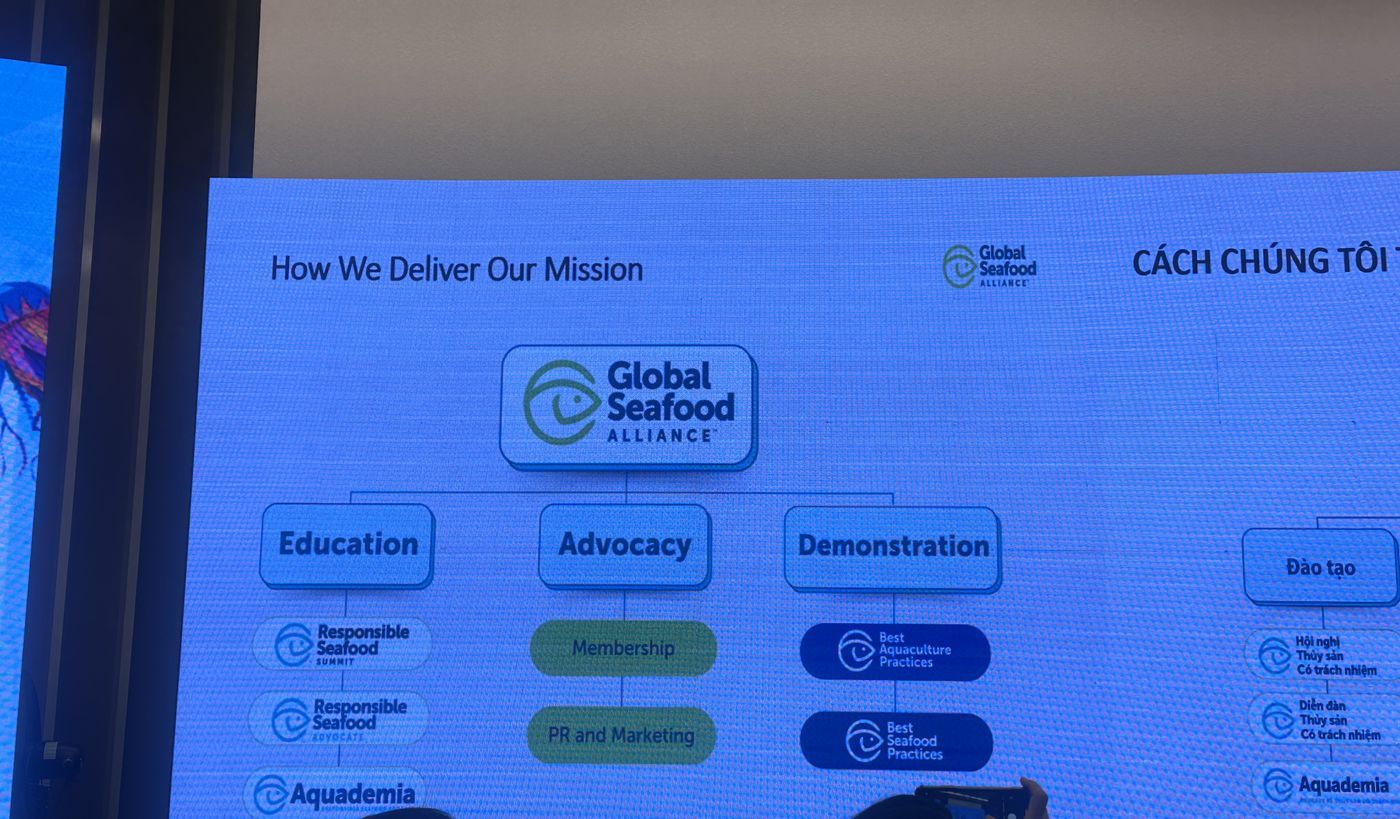
The organizational chart Kocsis showed explains how those three pillars work. The education branch includes the Responsible Seafood Summit, the Responsible Seafood Advocate and the Aquademia podcast. The advocacy branch includes a member engagement program, plus communications and marketing for the image of responsible seafood. And the demonstration branch — where Vietnamese farmers meet GSA most often — is the two certification programs: BAP (Best Aquaculture Practices) for the aquaculture chain, and BSP (Best Seafood Practices) for wild capture and processing.
03Full supply-chain certification — no link left out
The point Kocsis stressed most: GSA's programs are designed to be the most comprehensive in the industry, covering the pillars of responsibility across the entire seafood supply chain. The chain on the slide runs from feed mill → hatchery → farm → processing plant → consumer, plus a branch for collection and transport vessels delivering to the plant. A BAP-certified shrimp is not only checked at the pond — the feed pellets it eats, the seed stock that goes into the pond and the plant that processes it all sit within the same assessment system.
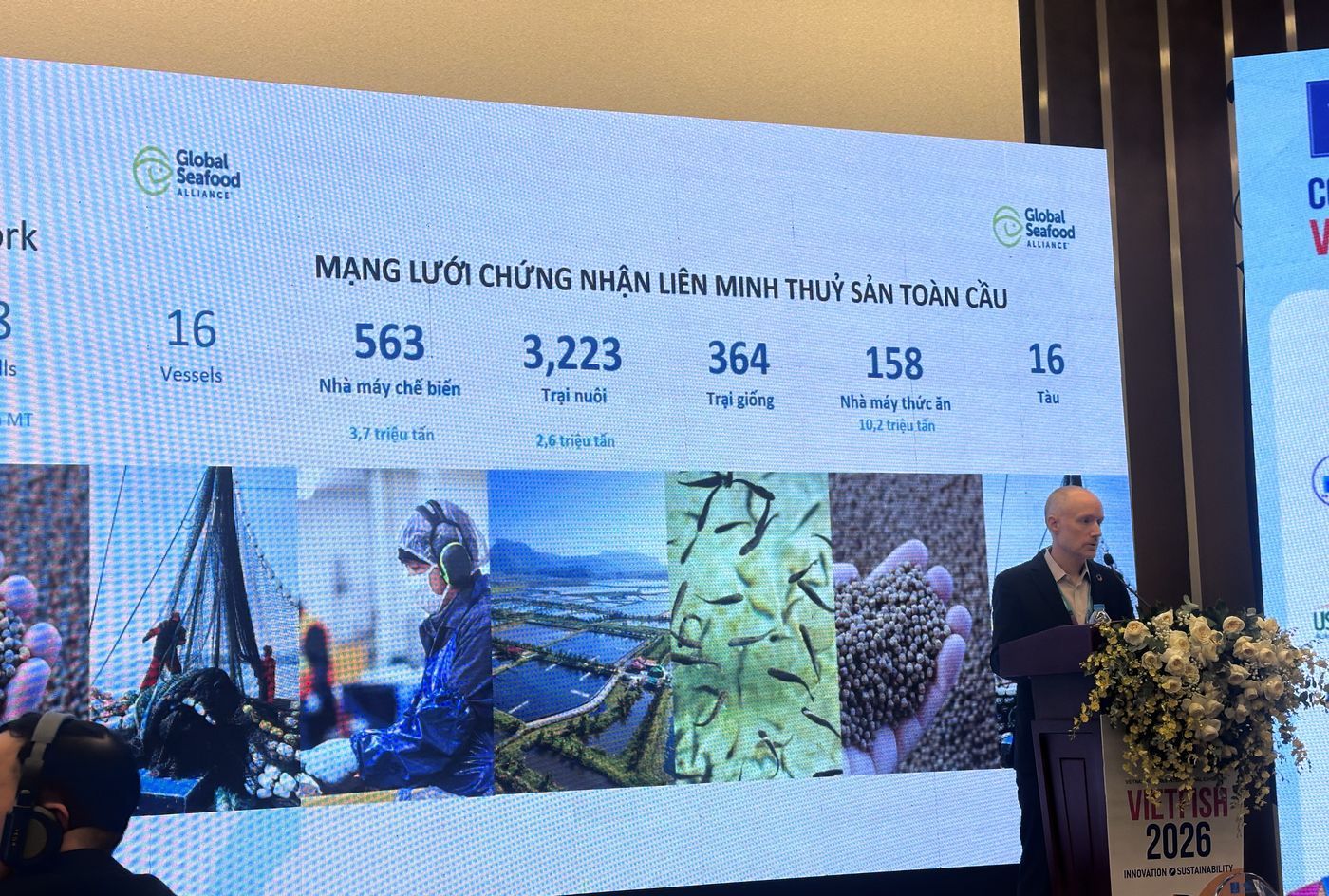
BAP-certified farms worldwide, producing 2.6 million tonnes — plus 563 processing plants (3.7 million tonnes), 364 hatcheries, 158 feed mills (10.2 million tonnes) and 16 vessels.
For international buyers, this is the common language of trust: a chain that can be traced from feed bag to dinner table.
04Why this matters for Vietnamese ponds
Vietnam is one of the countries with the most BAP-certified facilities in the world, and the market increasingly pays different prices for "documented" shrimp and "undocumented" shrimp. Understanding the system behind the blue fish logo helps companies know what they are joining: not buying a sticker, but entering a system of practices — from feed, seed stock and water quality to how medicine use is recorded throughout the crop cycle.

Digitize your farm records with Nuôi Lời
Record feed, water quality, cast-net samples, medicines and costs right at the pond; export multi-sheet Excel reports that support traceability records in line with ASC and GMP — exactly what standards like BAP require. Free, sign in with your phone number, no email needed.
Try Nuôi Lời →