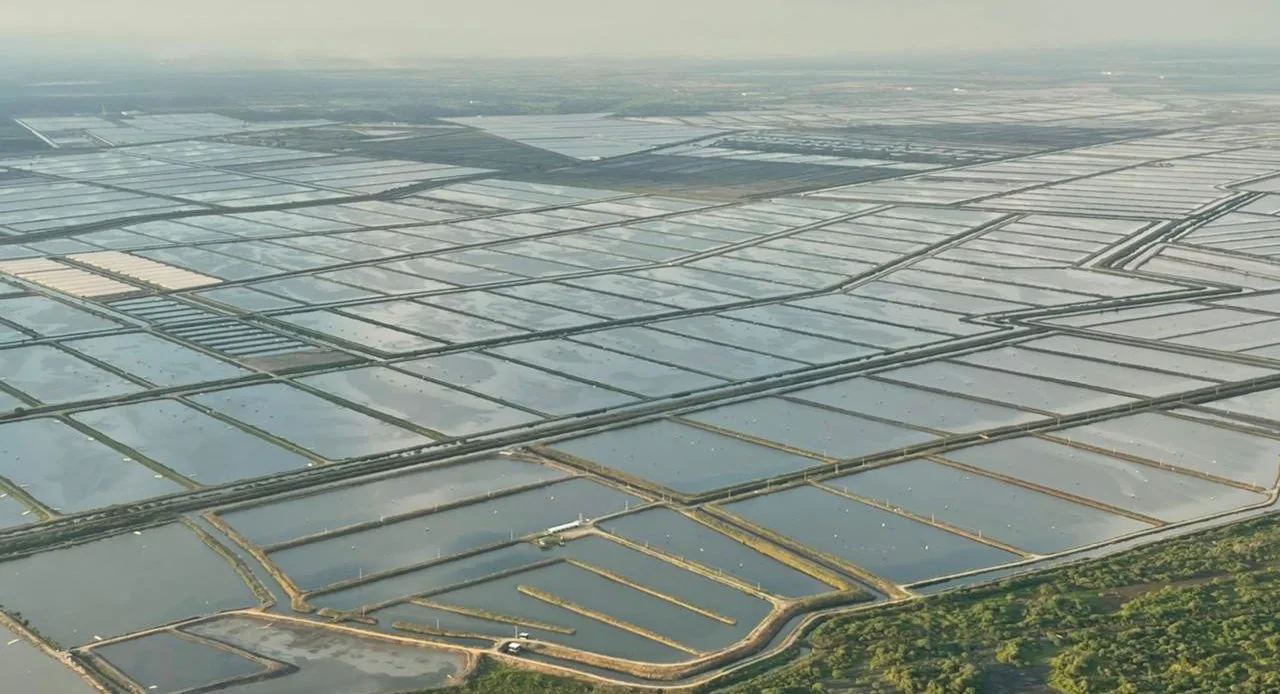
The Economist likens Ecuador's shrimp industry to "lean manufacturing" in the true sense: giant rectangular ponds blanket the Guayas delta; larvae are reared in greenhouse-style hatcheries, grown out in open-air ponds, then pumped onto trucks and taken straight to freezing plants. The whole chain runs like an industrial production line, constantly hunting down and eliminating inefficiencies.
From artisanal farming to the white spot crisis
Ecuador has farmed whiteleg shrimp — a species native to Latin America — since the 1960s, at family scale: wild larvae were scooped from the mangroves, with almost no selective breeding. Profits were high enough to fuel a massive expansion, but at a steep price: by 2000, deforestation had wiped out half of the country's mangroves. Then the white spot epidemic struck — 95% of shrimp in infected ponds died, and output fell 70% within two years; many farmers went bankrupt.
Two paths after white spot
The whole shrimp farming world faced the same question: what to do about the pathogen? Two schools of thought chose opposite answers — and twenty years later, the results are clear.
Intensive + sterile + antibiotics
- Densities pushed up to 300 shrimp/m²
- Seed stock isolated in the lab to be completely disease-free
- Antibiotics gradually became a habit
Low density + disease-resistant stock + no antibiotics
- Density only 1/10 of Asia's
- Breeding from shrimp that survived white spot
- Antibiotics removed from the process entirely
Low density — but precise to the minute
This is not "leave it to nature" farming. Since the 2010s, Ecuador's shrimp farms have kept innovating: automatic feeders release pellets every three minutes; underwater microphones listen to the shrimp chewing to tell when the stock is full; feed for the next crop is adjusted to the feeding rate of the previous one; every pond has its own aerators, and mechanical filtration reduces water pollution. The result: although yield per hectare lags behind Thailand or Indonesia, about 95% of shrimp survive to harvest, compared with only about 80% in Asia (figures from a Rabobank expert quoted in the article). Some groups run six 50-day crops a year — nearly double the crop cycle in India and Vietnam.
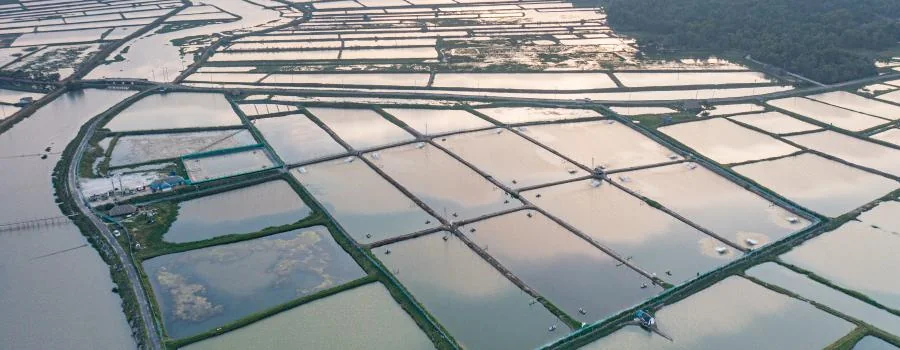
High survival naturally means low production costs. That is why, amid a global oversupply, Ecuador's farm-gate price is only 2.40 USD/kg and its farmers still thrive — while India's is 2.99 and China's 5.32 USD/kg.
Geopolitics gives a boost, but oversupply is the real problem
Ecuador was already the largest shrimp supplier to the EU and China but lagged behind in North America — until the US imposed a 50% tariff on Indian goods. Total duties on Indian shrimp rose to nearly 60%, compared with 10% for Ecuador; US importers switched suppliers en masse, and Americans now eat more Ecuadorian shrimp than shrimp from any other source. But the real problem is oversupply: output has grown 15% a year since white spot, and prices have fallen to historic lows. The way out they chose is to stimulate demand — whole shrimp to the Balkans and the Gulf, higher-value products for the US such as peeled shrimp, breaded shrimp and shrimp burgers.
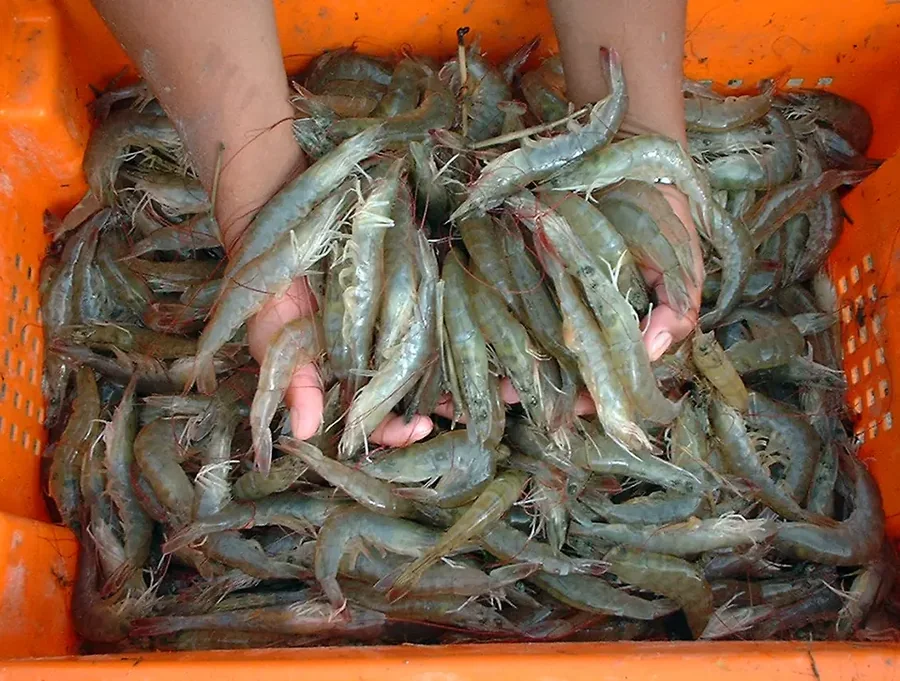
Ecuador did not win by wiping out the pathogen — it won by raising shrimp strong enough to live with it.
Commentary by the author of this summaryThree lessons seen from Vietnamese ponds
Build shrimp health, don't wage war on bacteria
Money is poured into killing bacteria and stamping out disease while the root is forgotten: healthy seed stock, a stable environment, a density the pond can carry. Fighting the pathogen is a war that can never be won.
Survival makes the money — not stocking density
Stock 30% more densely and lose survival, waste feed and spend more on treatments — and by the end of the crop you may not even match a moderately stocked pond. Ecuador has lower yields but higher profits.
Antibiotics are a door that is slowly closing
Export standards tighten residue limits every year, and processing plants ask for pond records before they ask about price. An antibiotic-free pond today means a good selling price tomorrow.